
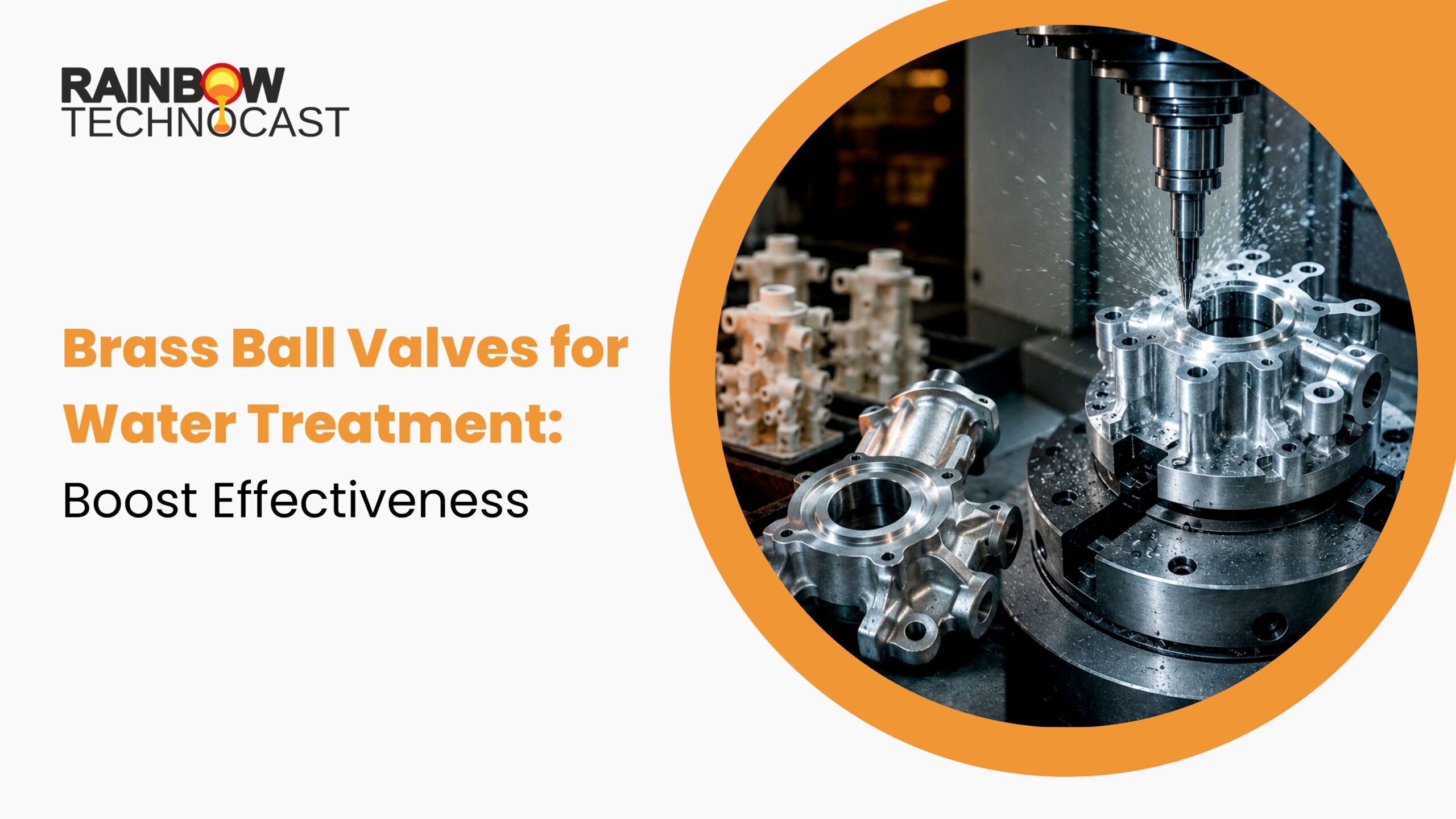
Leaky, inefficient, and difficult-to-maintain valves cause significant issues in water treatment, leading to leaks, downtime, and poor water quality across various operations. Choosing, specifying, and standardizing the correct ball valves for your skids is crucial for a definitive solution. Do that, and you cut losses, lift uptime, and keep compliance on track.
This guide details how brass ball valves provide reliable shut-off and clean operation in water and wastewater systems. It covers uses, specifications, pre-purchase checks, selection, application notes, and FAQs. Read entirely.
What a ball valve does?
A ball valve provides quarter-turn isolation using a drilled sphere. Turn the handle 90°, and you go from full flow to full shutoff.
- Fast isolation: Emergency stop without wheel-turning delay.
- Low pressure drop: Full-port options keep velocity and head loss in check.
- On/off duty: Ideal where throttling is minimal or avoided.
- Compact build: Saves space on crowded skids and pipe racks.
Where it sits in a plant?
- Intake and pre-treatment: Rapid isolation for strainers and chemical dosing tees.
- Filtration & backwash: Quick on/off on headers and instrument bypasses.
- RO/UF skids: Service valves on feed, reject, CIP branches.
- Distribution: Isolation on branch lines and meters.
Brass vs stainless and plastic
Brass (lead-free grades)
- Strengths: Cost-effective, easy to machine, dependable shut-off for general water service, wide availability of sizes and end connections.
- Limits: Very high temperature/pressure, aggressive chemicals, or high-chloride extremes call for caution.
Stainless (e.g., 304/316 families)
- Strengths: Better corrosion resistance and temperature tolerance; preferred for harsh chemistry, high-salinity, and thermal cycling.
- Trade-offs: Higher cost, heavier valves, longer lead times in some sizes.
Engineered plastics (uPVC/CPVC/PP/PVDF)
- Strengths: Corrosion-proof in many dosing lines; light weight; good for non-metallic systems.
- Trade-offs: Lower mechanical strength, tighter temperature limits, expansion/creep considerations for supports.
Bottom line: For mainstream water service with neutral chemistry and moderate conditions, lead-free brass ball valves are a solid default. Escalate to stainless for harsh duty or high temperatures; use plastics for chemical dosing where compatibility drives the spec.
Safety and compliance
Potable and process water demand clean materials and traceable compliance.
- Lead content: Specify lead-free brass (≤0.25% weighted average lead content, as a widely accepted benchmark).
- Potable contact: Look for certifications that confirm low leachables for drinking-water use.
- Gaskets and seats: Confirm seat and seal compounds suitable for your water quality and temperature.
- India-first reality: Public projects increasingly insist on low-lead materials, documented test reports, and alignment with national guidelines for potable systems. Align your submittals to that paper trail.
Sizing and specification
Get these right; the valve will quietly do its job for years.
Porting and bore
- Full port: Minimizes pressure drop; preferred on mains and backwash.
- Standard port: Acceptable on branches and utility lines where head loss is less critical.
Pressure and temperature class
- Match valve rating to your worst-case operating window (pump surge, backwash spikes, CIP cycles). Keep a buffer.
Ends and connections
- Threaded (BSP/NPT): Fast install on small lines; mind thread seal quality.
- Flanged: Alignment-friendly on larger diameters; easier removal for service.
- Weld/Socket: For permanent, leak-tight installations with fewer joints.
Seats and seals
- PTFE seats: General use, low friction, clean shut-off.
- Modified PTFE/Elastomers: Where higher temperature, cycling, or chemicals demand better resilience.
- Stem packing: Prefer live-loaded or double O-ring designs for long service intervals.
Actuation
- Manual: Simple, rugged, low CAPEX.
- Pneumatic/Electric: For remote operation, interlocks, and frequent cycles. Add position feedback to cut operator guesswork.
Application notes
Chemical dosing
- Use compact brass ball valves on carrier-water lines and bypass branches.
- Verify seal compatibility with coagulants, disinfectants, and pH adjusters.
- Avoid throttling—keep dosing control on metering pumps; use the valve for isolation only.
Filtration and backwash
- Full-port brass valves reduce head loss on filter inlets/outlets.
- For frequent backwash cycles, prioritize stem design and seat materials rated for cycling.
Membrane systems (RO/UF)
- Clean isolation on feed, reject, and permeate lines.
- If your CIP pushes higher temperatures or caustics, review material compatibility; upgrade where needed.
Wastewater branches and utility water
- Brass suits utility water and service lines around clarifiers and sludge handling where chemistry is neutral.
- For high-chloride or corrosive zones, switch to stainless or plastic.
India-first tip: Municipal and industrial plants often run mixed-material networks. Standardize your handles, stems, and actuation interfaces to simplify spares and training, especially across multi-site concessions.
Selection checklist
Work through this in order:
- Medium & chemistry: Potable/process, chlorides, chemical carryover.
- Pressure & temperature: Normal + extremes (surge, CIP).
- Size & porting: Full vs standard; check head-loss targets.
- Body material: Lead-free brass by default; escalate if harsh duty.
- Seats & seals: PTFE or upgraded compounds per duty.
- Ends: Threaded, flanged, or welded as the piping demands.
- Actuation: Manual vs automated; add feedback if interlocked.
- Compliance docs: Lead-free declaration, test reports, and potable-contact certification where applicable.
- Serviceability: Stem design, spare kit availability, handle orientation, clear tagging.
Cost and lifecycle
- Procurement cost: Brass typically wins on upfront price and availability.
- Installation cost: Threaded brass on small lines saves time; flanged brass reduces rework on mid-sizes.
- Operating cost: Low torque, low leak-by, fewer unplanned shutdowns.
- Lifecycle: The right seat/packing outlives poor metallurgy. Spend on internals before you over-spec the body.
Mistakes to avoid
- Using brass in harsh chemistry without checking chloride or temperature limits.
- Throttling with ball valves and expecting control-valve performance.
- Ignoring seat compatibility during CIP or disinfection changes.
- Mixing port types on a single header, creating uneven flow.
- Skipping paperwork, then scrambling during audits.
FAQs
Q1: Is brass safe for drinking water?
A: Yes—when you specify lead-free brass with documented compliance for potable contact and pair it with suitable seats and seals. Always ask for recent test reports.
Q2: When should I pick stainless steel instead?
A: Choose stainless for aggressive chemistry, high-temperature CIP, or high-salinity service. It costs more but protects uptime where brass would struggle.
Q3: Can ball valves throttle flow?
A: They can, but they shouldn’t—seat wear and hysteresis will bite you. Use them for on/off isolation and keep throttling on control valves or orifices.
Q4: What maintenance matters most?
A: Exercise valves on a schedule, check packing for weep, replace seats during planned shutdowns, and keep spares kits standardized across sites.
Q5: Do full-port valves really help?
A: Yes. Full-port valves reduce velocity and head loss on mains and backwash lines, protecting pumps and keeping energy bills sensible.
Conclusion
Brass ball valves earn their keep when you match them to the duty: neutral water, moderate temperatures, clean on/off service, and documented low-lead materials. Size the bore, pick the right seats, standardize ends and actuation, and lock in your paperwork. Do this once, and your plant runs smoother—with fewer surprises and cleaner audits.
Rainbow Technocast
We engineer precision-cast brass ball valve components and assemblies built for water and wastewater duty. Lead-free metallurgy, tight machining, and seat/packing options matched to Indian plant conditions help you cut leak-by, reduce torque, and simplify maintenance. Talk to our team for a spec-clean, audit-ready bill of materials for your next project.