
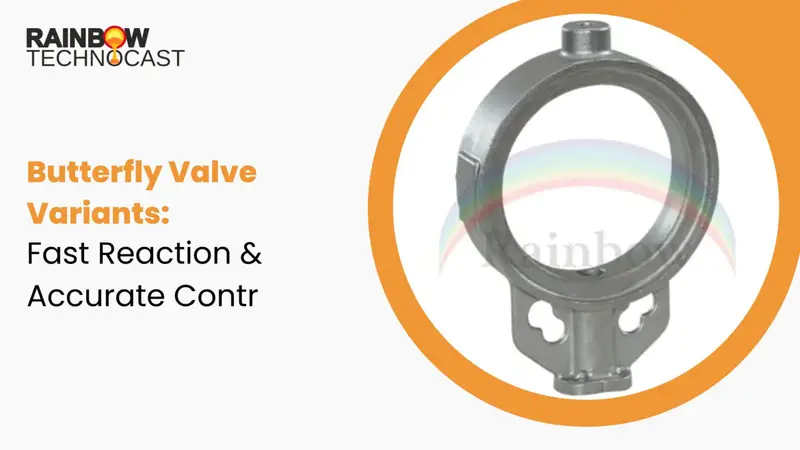
Quarter-turn actuation delivers valve operation in under 30 seconds versus multi-turn alternatives requiring 2-5 minutes—yet most engineers still specify butterfly valves as if all variants perform identically. The response speed is fast, and the action time of the solenoid valve is generally between tens of milliseconds and several seconds, creating operational advantages that compound across systems.
What buyers actually care about separates functional valves from exceptional ones: repeatable motion through thousands of tight cycles without degradation, torque consistency that eliminates control loop hunting, and reliable shutoff performance when real-world fouling transforms clean systems into abrasive environments. The mathematics of uptime depends on variant selection, not just valve selection.
Extended Stem Butterfly Valves: Reach Without Compromise
High-temperature applications and hazardous environments create access challenges that standard valve configurations can’t solve. Extended stem designs bridge the gap between valve location and operator safety.
- Remote Access Engineering Extended stems position the operating mechanism outside insulated pipe systems or hazardous zones, enabling safe manual operation without exposing personnel to extreme conditions. Stem lengths up to 48 inches provide mechanical reach while maintaining torque transmission efficiency.
- Mechanical Advantage Multiplication Longer lever arms reduce input torque requirements by 40-60% compared to standard stem configurations. This mechanical advantage becomes critical in large-diameter applications where manual override capability determines whether emergency shutoff remains feasible during power failures.
- Thermal Protection Systems Stem cooling paths prevent heat transmission from high-temperature processes to actuator components. This thermal isolation maintains seal integrity and prevents actuator degradation in applications where standard configurations would fail within months.
Manual override staging allows actuator bypass without system shutdown, providing operational flexibility that separates industrial-grade designs from commodity alternatives.
Pre-Insulated Butterfly Valves: Thermal Engineering Built-In
Energy loss through uninsulated valves costs industrial facilities thousands of dollars annually in wasted heating and cooling. Pre-insulated designs eliminate these losses while solving installation constraints.
- Factory-Applied Thermal Armor Pre-applied insulation maintains energy integrity throughout temperature cycling, preventing condensation formation that leads to corrosion and insulation degradation. Factory application ensures consistent thickness and thermal performance versus field-applied alternatives.
- Installation Acceleration Integrated insulation eliminates field insulation work, reducing installation time by 40-50% and eliminating coordination between mechanical and insulation contractors. This time compression translates to faster commissioning and earlier production startup.
- Thermal Expansion Management Pre-engineered thermal expansion joints accommodate temperature cycling without stressing valve connections or compromising sealing performance. Standard insulation systems create stress concentration points that lead to premature failure.
UL-Approved Butterfly Valves: Certification That Cuts Through Bureaucracy
We test to UL Standards, and the requirements for the installation and use of fire protection valves are included in the National Fire Protection Association (NFPA) installation standards—yet most buyers underestimate how certification affects project timelines and approval processes.
- Compliance Streamlining UL approval simplifies engineering review cycles by providing pre-validated performance data for safety systems, fire suppression applications, and hazardous area installations. Authority having jurisdiction approval becomes administrative rather than technical review.
- Procurement Acceleration Certified components eliminate the specification uncertainty that creates procurement delays. Purchase orders process faster when approvals are pre-established rather than requiring custom engineering review for each project.
- Liability Mitigation UL certification transfers performance liability from specifier to manufacturer, reducing professional liability exposure while ensuring components meet safety requirements under extreme conditions.
Actuated Butterfly Valves: Precision to the Millisecond
Actuated butterfly valves are used for quick shut-off in piping systems, with a compact and lightweight design they improve flow coefficient and limit pressure drops, but the real advantage lies in response precision that manual operation cannot achieve.
- Actuation Response Curves Pneumatic systems deliver sub-second response for emergency shutdown applications. Electric actuators provide position accuracy to ±1% for modulating control. Hydraulic options generate maximum torque for large-diameter or high-pressure applications where pneumatic systems lack force capability.
- Position Feedback Integration Analog position feedback enables diagnostic monitoring that predicts maintenance requirements before failure occurs. Digital limit switches provide binary confirmation for safety systems where position uncertainty creates liability exposure.
- Torque Margin Engineering Fouling conditions increase breakaway torque exponentially, not linearly. Smart actuator sizing accounts for debris accumulation patterns specific to each application, ensuring reliable operation throughout maintenance intervals rather than just at commissioning.
- Infrastructure Compatibility Actuator selection must align with existing plant power systems—24VDC, 120VAC, or 480VAC options each carrying different installation and maintenance implications that affect long-term operational costs.
Manufacturing Precision: The Performance Multiplier
The method of connecting the spindle to the disc must be positive without backlash so that the assembly functions as a unified system, but mechanical precision determines whether theoretical performance translates to field reliability.
Refined disc geometry and surface finish reduce breakaway torque variations that create control loop instability. Standard manufacturing tolerances allow dimensional variations that translate to inconsistent performance across production runs.
Rainbow Technocast’s investment casting expertise produces butterfly valve internals with geometric precision that eliminates these performance variables. Their controlled casting process maintains tight tolerances on complex geometries, ensuring predictable torque characteristics and eliminating the tuning cycles required to compensate for manufacturing inconsistencies.
Tight tolerances on critical dimensions reduce actuator sizing requirements by 20-30% because torque calculations can rely on design specifications rather than safety margins that compensate for manufacturing variability.
Variant Selection Strategy
| Variant Type | Primary Strength | Smart Upgrade Logic |
| Extended Stem | Remote access, high-temperature capability | Reduced manual force requirements, thermal protection |
| Pre-Insulated | Energy integrity, installation efficiency | Faster commissioning, reduced installation coordination |
| UL Approved | Safety compliance, specification confidence | Streamlined approvals, reduced procurement delays |
| Actuated | Speed, automation, precision control | Response curve matching, strategic torque margin planning |
Next-Level Specification Parameters
- Actuation Alignment: Match actuator response characteristics to control requirements—fast binary for safety systems, precise modulation for process control.
- Torque Analysis: Calculate performance requirements under clean conditions, then verify capability under worst-case fouling scenarios.
- Installation Integration: Verify footprint constraints, weight limits, and manual override accessibility before finalizing selections.
- Thermal Behavior: Specify insulation requirements based on energy loss calculations, not arbitrary standards.
- Certification Impact: Understand how approvals affect engineering review timelines and procurement processes.
Control Performance That Delivers Results
Butterfly valve variants enable operational excellence when specification discipline matches application reality and manufacturing precision supports field requirements. Fast actuation, accurate control, and engineered design details separate systems that perform predictably from those requiring constant adjustment.
The difference between adequate and exceptional performance lies in understanding that variant selection affects system-level reliability, not just component function. Smart specifications account for thermal cycling, fouling progression, and control loop dynamics rather than just nameplate operating conditions.
Share your flow requirements, control priorities, and installation constraints for spec-ready recommendations that eliminate guesswork and deliver operational confidence. Contact Rainbow Technocast for precision casting solutions that ensure valve internals perform consistently across variants and service conditions.