
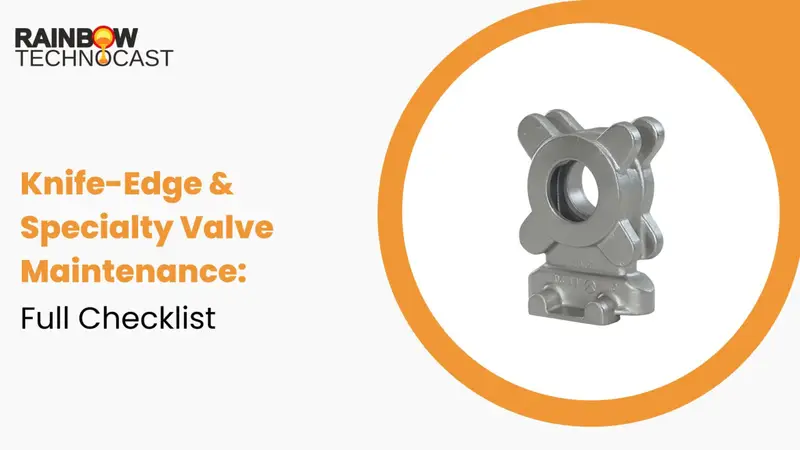
Most industrial maintenance teams overlook knife-edge and specialty valves until catastrophic failures shut down entire production lines. Industry data reveals that 64% of knife gate valve failures occur not from design flaws but from inadequate maintenance protocols—operators treat these precision components like standard gate valves, which destroys seats and gates within months. The problem intensifies in slurry, wastewater, and pulp applications where suspended solids accelerate wear rates. Deferred maintenance creates a cascade: minor packing leaks progress to stem binding, gate misalignment leads to seat damage, and corroded actuators fail during emergency shutdowns. The cost exceeds replacement parts—unplanned downtime in process industries averages $22,000 per hour according to recent studies. Proper maintenance extends service life by 200-300% while reducing emergency repairs by 75%. This checklist covers daily inspection protocols, scheduled maintenance intervals, troubleshooting procedures, and preventive measures that keep knife-edge and specialty valves operating reliably.
Daily Inspection Tasks
Visual examination catches problems before they escalate. Check valve bodies for external corrosion, particularly in aggressive environments. Inspect stem packing for active leaks—even minor weeping indicates gland adjustment needs.
Verify gate travel completes fully without binding or hesitation. Partial gate retraction causes flow-induced vibration that erodes both gate and seat surfaces. Actuated valves require position indicator verification against actual gate location.
Remove accumulated debris from gate edges and body cavities. Suspended solids trapped between gate and seat prevent complete closure and create leakage paths. Soft-bristle brushes work better than high-pressure water that can damage seals.
Weekly Maintenance Procedures
Stem packing tightness requires adjustment as gland followers settle. Tighten packing nuts 1/8 turn at a time while checking for stem binding. Over-tightening increases operating torque and accelerates stem wear.
Lubrication intervals depend on cycle frequency and environment. Apply manufacturer-specified lubricants to stem threads, gear mechanisms, and actuator bearings. Food-grade and pharmaceutical applications demand FDA-approved lubricants.
Test manual override mechanisms on automated valves. Corroded handwheels or frozen override gears fail during power loss emergencies. Exercise override systems monthly to prevent seizure.
Monthly and Quarterly Checks
Detailed seat inspection reveals early wear patterns. Minor scoring on elastomer seats can be dressed with fine emery cloth before replacement becomes necessary. Metal seats require professional refacing when scoring depth exceeds 0.005 inches.
Gate edge sharpness matters in knife-edge designs handling fibrous media. Rounded edges allow fibers to catch rather than cut cleanly, causing gate jamming. Resharpen gates when edge radius exceeds manufacturer specifications.
Pneumatic actuator systems need air supply pressure verification and leak testing. Pressure drops below 60 PSI prevent full gate travel in many designs. Soap solution applied to fittings reveals air leaks that waste compressed air and reduce actuator force.
Annual Overhaul Requirements
Complete disassembly enables internal inspection impossible during operation. Document component condition with photographs before cleaning. This baseline enables wear rate tracking across maintenance cycles.
Replace consumable components regardless of apparent condition. Elastomer seals, packing sets, and O-rings degrade from thermal cycling even without visible damage. Reusing marginal seals causes leaks within weeks of reassembly.
Torque specification adherence during reassembly prevents both undertightening and overtightening failures. Bonnet bolts require specific patterns and values that distribute stress evenly. Calibrated torque wrenches eliminate guesswork.
Troubleshooting Common Problems
High operating torque indicates either packing over-compression or internal misalignment. Loosen packing incrementally while monitoring stem leakage. Persistent high torque after packing adjustment requires internal inspection for gate binding.
Seat leakage results from foreign material trapped in sealing surfaces or damaged seats. Temporary fixes using increased closing force damage seats further. Proper repair requires disassembly, cleaning, and seat inspection.
Gate jamming in partially open positions stems from debris accumulation or corrosion. Forcing jammed gates with excessive torque bends stems and destroys internal components. Remove valve from service and clean thoroughly before resuming operation.
Best Maintenance Practices
Manufacturer maintenance manuals provide valve-specific intervals and procedures. Generic maintenance schedules miss design variations that affect service requirements. Request manuals during procurement and maintain them in accessible locations.
Environment-specific adjustments shorten maintenance intervals in aggressive conditions. Acidic media, high temperatures, and abrasive slurries accelerate wear beyond standard schedules. Double inspection frequency in severe service applications.
Spare parts stocking prevents extended downtime when components fail. Critical spares include packing sets, elastomer seats, and actuator seals. Source parts from manufacturers rather than aftermarket suppliers to ensure proper fit.
Frequently Asked Questions
How often should knife-edge valves be inspected in slurry service?
Daily visual inspections catch debris buildup before it damages gates. Weekly detailed checks verify seat condition and gate edge sharpness. Monthly disassembly for thorough cleaning extends service life significantly in abrasive applications.
What indicates packing failure before external leakage occurs?
Increasing operating torque signals packing degradation or over-compression. Stem scoring visible during inspection shows inadequate lubrication or contaminated packing. Replace packing proactively when torque increases 20% above baseline measurements.
Can proper maintenance extend valve life beyond rated cycles?
Manufacturer cycle ratings assume average maintenance practices. Aggressive preventive maintenance including frequent cleaning, timely seal replacement, and proper lubrication commonly doubles design life. Document maintenance activities to establish actual service life patterns.
What damage results from improper lubrication?
Insufficient lubrication accelerates stem thread wear and increases packing friction. Wrong lubricant types contaminate process media or degrade seals chemically. Over-lubrication attracts abrasive particles that act as grinding compounds.
Conclusion
Implement scheduled maintenance intervals, follow manufacturer procedures, and stock critical spare parts. This approach prevents catastrophic failures while maximizing valve service life.
Rainbow Technocast manufactures knife-edge and specialty valves designed for maintainability in demanding industrial applications. Our technical documentation includes detailed maintenance procedures, recommended spare parts lists, and troubleshooting guides that support extended service life.
Need maintenance support for specialty valves? Contact our service team to discuss preventive maintenance programs, spare parts procurement, and field service capabilities tailored to your facility requirements.