
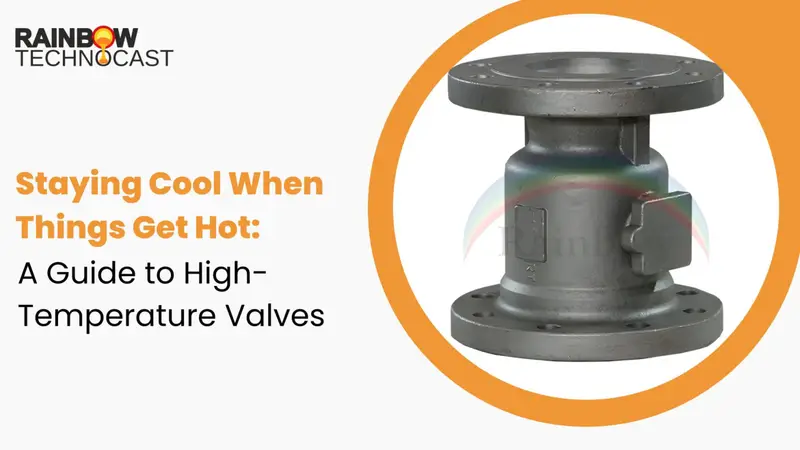
High-temperature valves are the cornerstone of many industrial sectors, enabling manufacturers to safely control fluid flow in the most extreme environments. These specialized valves are engineered to operate flawlessly in applications where process temperatures routinely soar above 400°C and sometimes well beyond 1000°C, making them indispensable in power generation, steel processing, petrochemical refining, and more. The global market for high-temperature valves is set for robust growth, with the ongoing expansion of energy, fertilizer, cement, glass, and chemicals sectors demanding increasingly resilient flow control solutions.
Material Considerations: Choosing the Right Metals for High-Temperature Service
When it comes to high-temperature valves, material selection is paramount. Not all metals can survive the relentless thermal assault posed by demanding processes. Stainless steel and carbon steel lead the pack for their high melting points (around 1425°C–1540°C and 1400°C–1530°C, respectively), superior mechanical strength, and resistance to oxidation at elevated temperatures. Other exotic alloys such as Inconel, Hastelloy, and Monel are chosen for ultra-high temperature or highly corrosive settings, thanks to their ability to retain structural integrity and resist chemical attack.
It is equally critical to ensure compatibility of all valve components – seats, seals, stems, and even fasteners – with the maximum process temperature. For example, PTFE (Teflon) seats, popular in standard valves, may fail above 250°C, so high-temp designs often specify reinforced graphite or ceramic sealing elements. Choosing the right combination of body and trim materials not only maximizes reliability but can also extend service intervals and lower total ownership costs.
Types and Construction: Exploring Varieties of High-Temperature Valves
Modern industry requires high-temperature valves in multiple forms, each engineered for specific service needs and maintenance preferences:
Two-Piece and Three-Piece Ball Valves
Two-piece valves feature a body composed of two tightly connected segments, facilitating fast on-site disassembly for cleaning or part replacement without full pipeline removal. Three-piece designs add further convenience by allowing the center section to be serviced while the end connections remain in-line, reducing maintenance downtime and labor.
Side Entry Ball Valves
Side entry ball valves, constructed using multiple forged and machined parts assembled from the side, offer enhanced durability. These valves are favored in critical service due to their robust sealing, easier maintenance access, and the ability to inspect or retrofit internals while still installed in the line.
Welded Body Ball Valves
For the most demanding, low-maintenance applications, welded body ball valves reign supreme. Once assembled, their seamless design eliminates leak paths and is rigorously tested by non-destructive means – ensuring reliability even when direct inspection or repair is impractical. This makes them ideal for continuous, high-pressure, high-temperature service where downtime is not an option.
Key Industries and Applications of High-Temperature Valves
High-temperature valves serve as the “first responders” in several key industrial applications:
- Power Plants: Superheated steam flow control and turbine protection.
- Refineries and Petrochemicals: Crude oil and gas processing under harsh thermal loads.
- Steel, Glass, & Cement Plants: Handling hot air, fuel gases, and molten materials.
- Fertilizer and Chemical Processing: Aggressive heat-carrying fluids in reactors and distillation units.
- Marine & Defense: Exhaust gas handling and heat management onboard vessels.
Selecting the right valve for each application isn’t just about temperature ratings – it’s about ensuring safety, efficiency, and compliance with rigorous industry standards.
Design and Safety Factors for High-Temperature Valves
High-temperature valves are more than just metal bodies; their design addresses every aspect of extreme service:
- Thermal Expansion: Specialized bonnet and packing designs accommodate changes in length and maintain tight seals as temperatures fluctuate.
- Pressure-Temperature Rating: High-temp valves must meet dual demands of both elevated heat and high pressure, requiring thicker walls, stronger fasteners, and often, live-loaded packing systems.
- Actuation: The choice between manual, electric, pneumatic, or hydraulic actuation depends on operational needs and safety protocols. Automated systems often include fail-safe features to ensure critical valves operate during emergencies.
- Non-Destructive Testing: All welded assemblies are subjected to 100% NDT (Non-Destructive Testing) to guarantee structural integrity under thermal cycling.
Maintenance and Performance: Strategies for Longevity
Maintaining high-temperature valves means more than just occasional lubrication. Regular inspection for erosion, embrittlement, and seat degradation is vital, especially in service areas where scaling, coking, or chemical attack is a risk. Predictive maintenance, leveraging thermal imaging or vibration sensors, is increasingly used in modern plants to spot potential failures before they escalate.
Energy Efficiency & Sustainability: The Hidden Value
Investing in robust high-temperature valves directly contributes to energy savings and sustainability. Reliable closure minimizes losses in hot media, improving system efficiency and reducing overall fuel consumption. Materials or designs that offer better heat retention and sealing not only conserve energy but also cut emissions in line with global climate goals. Environmentally-conscious design, including longer service life and fewer replacements, further supports green manufacturing objectives.
Innovation at Rainbow Technocast: The Future of High-Temperature Valves
At Rainbow Technocast, we draw on decades of expertise, state-of-the-art investment casting, and continual R&D to deliver high-temperature valves tailored to your industry needs. Our designs incorporate materials selected for Indian operating environments, rigorous testing protocols, and innovative sealing systems that keep your processes running cooler – even when things get hot. We work closely with clients to customize valve geometries, coatings, and connections for complex projects, ensuring maximum uptime and safety.
Choosing the Right High-Temperature Valve: Your Checklist
- Check Material Compatibility with process media and target temperature
- Select the Best Valve Type (two-piece, three-piece, side entry, welded body) for cleaning, inspection, and operational needs
- Insist on Enhanced Sealing and packing systems for leak prevention
- Look for Proven Designs with a track record in your application sector
- Rely on Suppliers with expertise in quality control, non-destructive testing, and aftersales support
Conclusion: High-Temperature Valves—The Heat Shields of Industry
When the pressure is on – literally – only the best-engineered high-temperature valves can guarantee the safety, efficiency, and success of critical processes. As India’s industries reach further into the future, Rainbow Technocast remains your trusted partner, bringing cool solutions to even the hottest challenges. For robust, innovative, and reliable high-temperature valves, choose the expertise that outlasts the competition.