
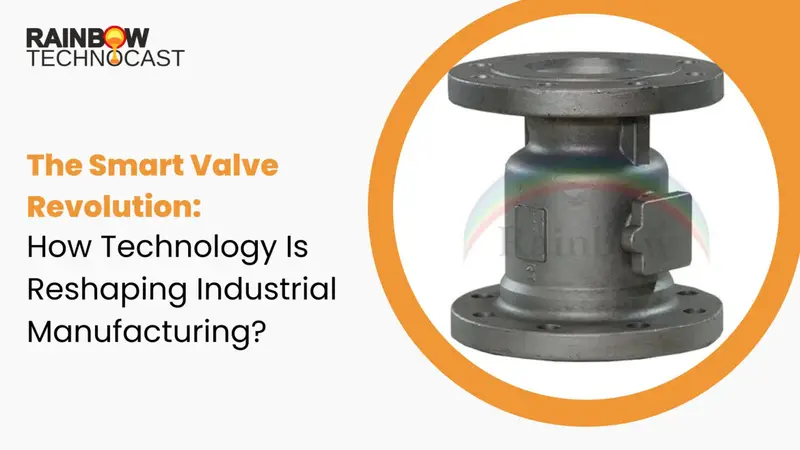
Industrial manufacturing has undergone a dramatic technological revolution over the past decade, and the valve industry sits at its epicenter. Once rooted in legacy systems and manual processes, today’s leading manufacturers are rewriting the rules with digitalization, automation, smart sensors, and advanced materials. K K INTERNATIONAL stands at the forefront of this transformation, delivering next-generation valve solutions tailored for modern industry demands. In this blog, we explore how the integration of digital tools, artificial intelligence, and sustainable strategies is propelling a new era—the Smart Valve Revolution.
Customization and Digital Engineering: Meeting Unique Industry Needs
Gone are the days when mass-produced, one-size-fits-all valves dominated the marketplace. Driven by rising demand from sectors such as chemical processing, water management, and oil & gas, manufacturers now employ powerful CAD, simulation, and digital twin technologies to deliver custom-engineered valves—often within days, not weeks. Digital platforms empower designers to visualize thermal, pressure, and flow dynamics in real time, refining products at the click of a button. This breakthrough sharply increases agility and enables the rapid development of dual check, axial check, and low-emission butterfly valves built for unique industrial challenges.
Customization isn’t just about niche specifications. It’s a competitive necessity: Recent industry research finds that highly tailored valve solutions can reduce production downtime by up to 18% and cut total cost of ownership by 23% versus off-the-shelf alternatives.
Digital Manufacturing: Additive, CNC, and Robotics Transforming Production
The manufacturing process itself is experiencing seismic change. Traditional casting and forging methods have given way to cutting-edge technologies—additive manufacturing (3D printing) and precision CNC machining allow fabrication of complex internal geometries and intricate designs never before possible. These advances yield higher-quality valve components, dramatically minimize material waste, and ensure faster time to market.
Automation and robotics are also game-changers. Robots now conduct high-precision assembly and quality control, ensuring uniformity down to the micron and slashing human error rates. In hazardous areas, robotic systems increase worker safety while accelerating throughput. According to industry benchmarking, plants utilizing advanced robotics achieve up to 36% faster assembly times and reduce manufacturing defects by as much as 29%.
Intelligence Inside: From Sensors to Smart Valves
A standout trend in the valve sector is the rapid adoption of intelligent valve technologies. Smart valves are equipped with embedded sensors, actuators, and microcontrollers linked to cloud-based analytics and artificial intelligence (AI). These valves continuously collect data on pressure, flow, and temperature, making real-time adjustments to optimize performance and energy efficiency.
Smart valves don’t merely act—they think. Predictive algorithms interpret sensor readings to anticipate fluctuations and adapt seamlessly, extending equipment lifespan and reducing downtime. AI-powered diagnostics flag anomalies for preventative maintenance, a leap that industry experts agree can lower unplanned interruptions by more than 40%. In sectors like oil & gas and pharmaceuticals, smart valves contribute to substantial operational savings while maximizing plant uptime.
The Industrial Internet of Things (IIoT): Interconnected Operations and Data Sharing
Digitalization has ushered in the age of the Industrial Internet of Things (IIoT). Industrial facilities worldwide now host networks of interconnected valves, pumps, and actuators, exchanging real-time data on secure platforms. This integration allows processes to run cooperatively and efficiently, eliminating bottlenecks and elevating system reliability.
Remote monitoring, edge computing, and cloud-based command centers provide unparalleled oversight and agility. Facility managers gain instant insight into asset health, resource usage, and performance trends. By 2025, it’s projected that more than 60% of new valve installations in critical sectors will incorporate IIoT-enabled communication, underlining this game-changing shift.
Automation and Robotics: Precision, Speed, and Safety Unleashed
The rise of advanced robotics has fundamentally changed not only how valves are made, but also how they’re tested, installed, and maintained. Automated quality inspection systems powered by machine vision can detect surface anomalies, dimensional irregularities, and material flaws before faulty valves reach the supply chain.
In manufacturing lines, robots execute precision assembly tasks with consistency that can’t be rivaled by manual labor. In settings where environmental hazards or high pressures are present, robotic deployment greatly improves worker safety and reduces liability. The future promises even more—collaborative “cobot” systems and drone inspections poised to further streamline the value chain.
Smart and Sustainable Manufacturing: Energy, Emissions, and Green Materials
Global mandates for cleaner, greener manufacturing are reshaping the valve sector. The best manufacturers blend technology with environmental stewardship at every process step. Intelligent valves equipped with energy-efficient actuators, leak detection, and predictive analytics help companies achieve compliance and lower their carbon footprint.
Sustainable practices go beyond smart products. The adoption of recyclable alloys, reduced manufacturing waste, and closed-loop process water systems are new industry standards. Studies show that plants employing these eco-forward tactics can achieve resource savings of up to 25% per year and significantly reduce emissions—all while delivering uncompromised quality and performance.
Overcoming Industry Challenges: Talent, Costs, and Resource Volatility
The shift toward a smart, digitalized valve industry doesn’t come without challenges. Fluctuations in raw material prices, intense competition, and a shortage of highly skilled technical personnel create headwinds. Leading companies counter these risks with upskilling programs, supply chain digitization, and real-time cost-tracking tools, staying nimble and responsive to market uncertainties.
Application Horizons: Expanding Opportunities Across Sectors
From wind and solar power fields to advanced chemical plants, the smart valve revolution is opening new frontiers. As renewable energy infrastructure expands, specialty valves tailored for extreme conditions—corrosion, variable pressure, and high-cycle demands—will be in high demand. In critical pipeline networks, next-gen leak detection and self-healing valve systems promise safer, more resilient infrastructures.
Emerging use cases include valves for hydrogen production, carbon capture facilities, and pharmaceutical clean rooms—each bringing unique engineering challenges and opportunities for innovation.
Future Outlook: Integration, Intelligence, and Industry 4.0
Industry leaders and analysts agree: The future of valve manufacturing is inexorably digital, sustainable, and integrated. As AI, IIoT, and automation continue to blend, the line between process control and business optimization is blurring. Next-generation smart valves will not only direct essential flows but will also supply the actionable insights that define competitive advantage.
Manufacturers like K K INTERNATIONAL, who invest in these technologies now, are securing a place as partners of choice for the world’s most demanding and innovative industries.
Conclusion: Your Partner for the Next Wave of Industrial Advancement
At K K INTERNATIONAL, we believe the smart valve revolution is just beginning. By embracing digital manufacturing, intelligent products, and sustainable innovation, we deliver tailor-made valve solutions to fuel growth, safety, and reliability—even in the most demanding environments. As industrial manufacturing reshapes itself, choose a technology partner that leads the change—today and tomorrow.