
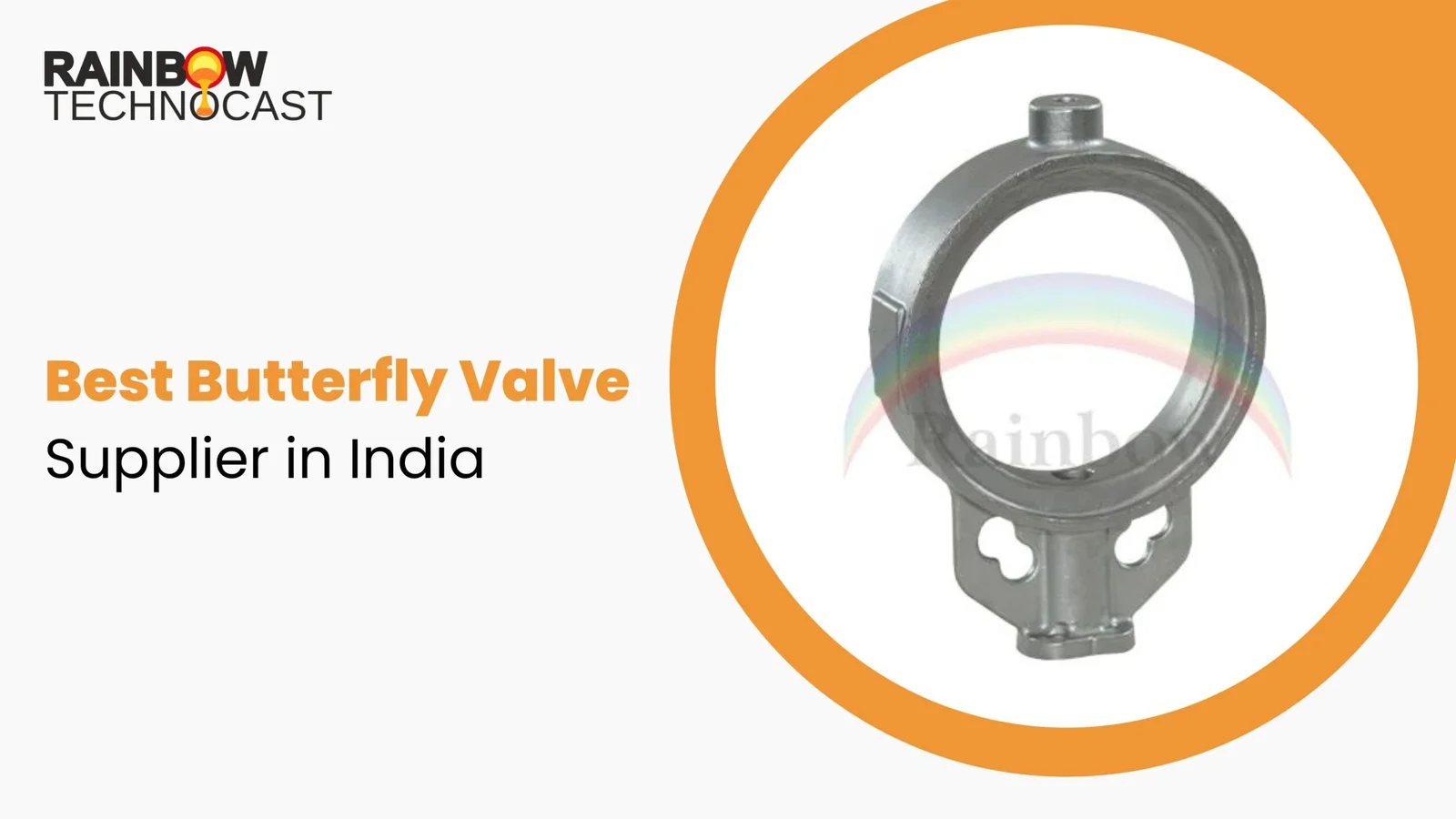
Traditional valve manufacturing follows a predictable path: design, cast, machine, test, ship. Smart manufacturers have flipped this equation entirely. The breakthrough lies in precision casting integration—where foundry science meets computational fluid dynamics before the first mold is poured.
Modern manufacturing processes involve precision techniques such as machining, casting, or forging, followed by rigorous testing to adhere to strict quality standards—but the differentiation happens upstream. Elite suppliers now run flow simulation models during the design phase, optimizing internal geometries for minimal turbulence and maximum seal integrity.
Why This Matters: A butterfly valve’s disc positioning affects flow coefficient by up to 40%. Manufacturers using integrated design-to-casting workflows deliver superior Cv ratings while reducing material waste—a competitive advantage that compounds across thousands of units.
India’s Casting Infrastructure Advantage
India’s valve market is projected to grow at a CAGR of around 7.88% over the forecast period 2025-2030, but growth alone doesn’t explain India’s emerging dominance in precision valve manufacturing. The secret weapon is decades of metallurgical expertise refined through high-volume automotive and aerospace casting.
The Technical Edge:
- Nodular iron mastery: Indian foundries perfected ductile iron casting for automotive applications, now applying this precision to valve bodies requiring exceptional strength-to-weight ratios
- Multi-alloy capability: Leading suppliers maintain furnaces for stainless steel, carbon steel, and exotic alloys within single facilities
- Integrated machining: CNC integration directly with casting lines reduces tolerance stack-up errors
Rainbow Technocast exemplifies this evolution. While competitors outsource casting to generic foundries, integrated manufacturers control every variable from molten metal chemistry to final surface finish. This vertical integration eliminates the quality wildcards that plague assembly-only operations.
The Economics of Scale vs. Precision
Top manufacturers employ over 350 skilled workers with production capacity exceeding 35,000 valves per month, but volume means nothing without process control. The real competitive moat isn’t size—it’s the ability to maintain dimensional accuracy across high-volume production runs.
Smart buyers recognize three supplier tiers:
Tier 1: Volume assemblers using commodity castings Tier 2: Integrated manufacturers with foundry control
Tier 3: Precision casting specialists with metallurgical R&D capabilities
The cost differential between Tier 1 and Tier 3 suppliers often appears minimal at purchase—but lifecycle economics tell a different story. Precision-cast valve bodies demonstrate 60% longer service life in corrosive environments, while superior sealing surfaces reduce maintenance frequency by half.
Material Science: The Invisible Differentiator
Butterfly valves in chemical applications must resist chemical corrosion, making material selection critical for controlling flow of chemical substances. Here’s where technical depth separates leaders from followers.
Generic suppliers specify “stainless steel” and call it engineering. Advanced manufacturers optimize grain structure through controlled cooling rates, achieving superior corrosion resistance without exotic alloy costs. The metallurgy matters more than the chemistry.
Case Study: A petrochemical facility reduced valve replacement cycles from 18 months to 4+ years by switching from standard 316SS to properly heat-treated, precision-cast alternatives—despite identical material specifications on paper.
The Integration Imperative
Industrial automation growth in sectors like oil & gas, power generation, and water treatment drives butterfly valve demand, but automation reveals quality gaps that manual operations mask. Automated systems expose every geometric imperfection, every material inconsistency, every assembly tolerance error.
Forward-thinking manufacturers invest in automated testing systems that validate performance under actual operating conditions—not just laboratory benchmarks. Integrated suppliers with foundry control can correlate casting parameters with field performance, creating feedback loops that generic assemblers simply cannot match.
The Bottom Line: When system reliability matters more than initial purchase price, integrated casting expertise trumps assembly economics every time.
Choosing Your Manufacturing Partner
The butterfly valve supplier landscape divides cleanly between commodity assemblers and precision manufacturers. Smart procurement teams look beyond certifications and price lists to evaluate foundry capabilities, metallurgical expertise, and integrated quality systems.
Three Questions That Matter:
- Does the supplier control casting chemistry and cooling rates?
- Can they correlate material properties with field performance data?
- Do they invest in process improvement or just capacity expansion?
Rainbow Technocast’s foundry-integrated approach answers all three—combining decades of precision casting expertise with modern valve engineering. While competitors chase market share through volume pricing, integrated manufacturers win through lifecycle value.
The choice isn’t between suppliers—it’s between manufacturing philosophies. In industrial applications where downtime costs thousands per hour, precision casting isn’t a luxury. It’s the entry point to serious consideration.