
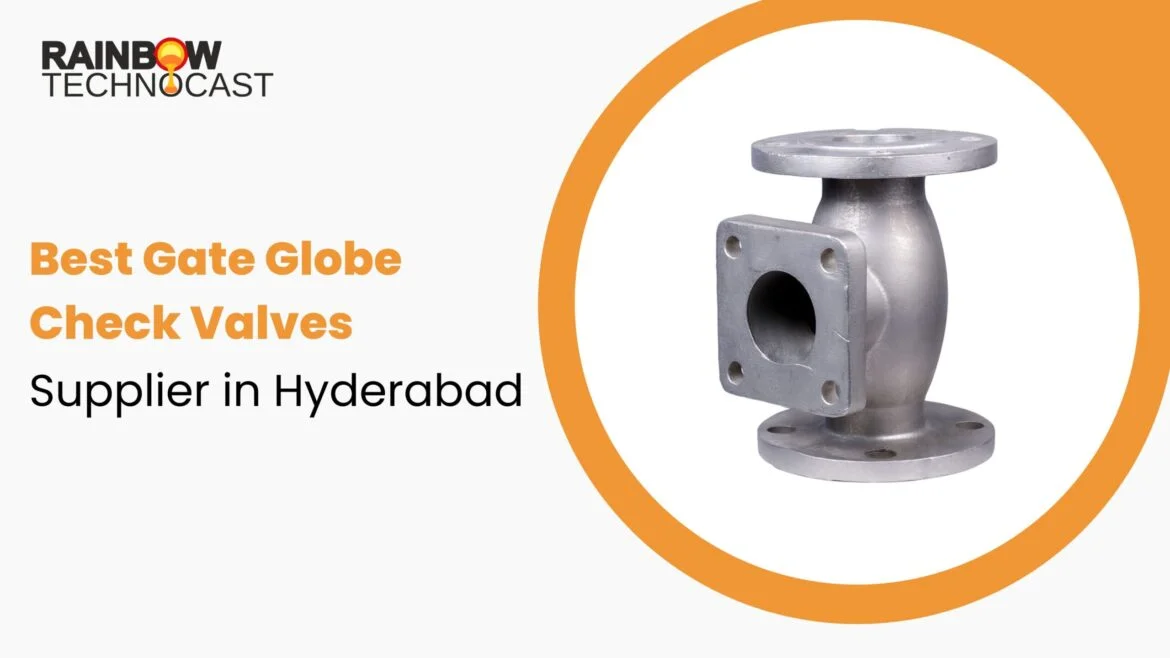
Introduction
Valve failure costs more than the replacement part. When a gate valve leaks during shutdown, you lose production time. When a globe valve fails to throttle properly, your entire process control suffers. When a check valve allows backflow, pumps destroy themselves within hours. These aren’t hypothetical problems—they’re daily realities in industrial operations that chose suppliers based purely on price.
Gate, globe, and check valves serve fundamentally different purposes in piping systems. Using the wrong type or buying poorly manufactured units creates cascading failures that shut down operations. Hyderabad has become a significant valve manufacturing center, but supplier quality varies dramatically.
This guide explains what each valve type does, when to use them, and how to identify suppliers who deliver reliable components versus those selling adequate-at-best products. You’ll learn material selection criteria, application-specific requirements, and installation practices that prevent the expensive failures most operations experience unnecessarily.
Gate Valves: Full Flow or Complete Shutoff
Gate valves control flow in binary fashion—fully open or fully closed. The wedge-shaped gate lifts completely out of the flow path when open, creating minimal pressure drop. This makes them ideal for mainline isolation where flow restriction would cause problems.
Attempting to throttle flow with gate valves damages the wedge through vibration and erosion. Partially open positions expose the gate to high-velocity fluid that creates turbulence and wear. Within months, the valve no longer seals properly when closed.
Key Components
The valve body provides pressure containment. The wedge (or gate) moves perpendicular to flow. The stem transmits operating force from the handwheel or actuator. The bonnet seals the body and supports stem packing.
Material selection depends on pressure, temperature, and fluid characteristics. Carbon steel suits most water and hydrocarbon services. Stainless steel prevents corrosion in chemical processing. Alloy steels handle high-temperature steam applications.
Globe Valves: Precision Flow Control
Globe valves excel at throttling and flow regulation. The disc moves parallel to flow direction, making contact with a seat that can be positioned anywhere between fully open and fully closed. This allows precise flow adjustment without the damage gate valves suffer.
The trade-off: higher pressure drop even when fully open. The flow path changes direction through the valve body, creating resistance. For applications requiring frequent adjustment—cooling water flow, chemical feed rates, steam pressure control—this penalty is worth paying.
Construction Details
The globe-shaped body gives these valves their name. Flow enters below the seat in most designs, though Y-pattern globes reduce pressure drop in high-flow applications. Disc and seat materials must resist erosion from throttling service.
Here’s what most buyers miss: globe valve orientation matters critically. Installing them backwards increases pressure drop significantly and accelerates wear. The “flow to open” direction ensures system pressure helps seat the disc when closing.
Check Valves: Preventing Destructive Backflow
Check valves allow flow in one direction only, closing automatically when flow reverses. This prevents pump damage from backflow, protects equipment downstream from reverse pressure, and eliminates water hammer in certain installations.
Types and Applications
Swing check valves use a hinged disc that swings open with forward flow and closes when flow stops. They suit larger pipe sizes and lower-pressure applications. Minimal pressure drop when fully open. Potential for water hammer if flow reverses quickly.
Lift check valves use a disc that lifts vertically from the seat. Suitable for high-pressure systems and smaller sizes. Must be installed horizontally with flow upward through the seat. Higher pressure drop than swing types but faster closing action.
Dual-plate check valves use two spring-loaded semicircular discs. Compact design suits tight spaces. Lower weight and shorter face-to-face dimensions. Fast closing prevents backflow surges that damage pumps.
Material Selection Strategy
Material choice determines valve longevity more than any other factor. Carbon steel (ASTM A216 WCB) handles most water, oil, and gas services up to 425°C. Cost-effective and readily available. Corrodes in acidic or chloride-containing fluids.
Stainless steel (SS316, SS304) resists corrosion in chemical processing, seawater, and food applications. Temperature capability extends beyond 500°C. Costs 3-5 times more than carbon steel but lasts significantly longer in corrosive service.
Alloy steels suit extreme conditions—high temperatures in power plants, high pressures in petrochemical units. Chrome-moly alloys (F11, F22) handle temperatures exceeding 600°C. Material costs increase but premature failure costs far more.
Standards and Quality Verification
API 600 covers gate, globe, and check valves for petroleum and natural gas industries. ASME B16.34 specifies pressure-temperature ratings and materials. BS 1873 covers carbon steel gate and globe valves. These aren’t bureaucratic requirements—they’re engineering standards that prevent failures.
Quality suppliers provide material test reports, pressure test certificates, and dimensional inspection data. Vague documentation or refusal to provide certificates indicates problems. You’re buying components that must work reliably for years under demanding conditions.
Application-Specific Selection
Oil and gas operations need gate valves rated for sour service if H2S is present. Standard materials fail catastrophically in sulfide environments. Water treatment plants require bronze or stainless trim to prevent corrosion from chlorine and pH variations.
Chemical processing demands compatibility between valve materials and process fluids. A valve perfectly suited for water fails rapidly in acids or solvents. Power generation requires high-temperature alloys for steam service above 400°C.
Installation Best Practices
Position gate and globe valves with stems vertical or horizontal—never stem-down, which traps debris in the bonnet. Install check valves in proper flow direction with adequate straight-pipe upstream to prevent turbulence. Use gaskets rated for your fluid and temperature.
Tighten flange bolts in star pattern to ensure even compression. Support large valves independently from piping to prevent stress on connections. Follow torque specifications—under-tightening causes leaks, over-tightening damages flanges and gaskets.
Conclusion
Choosing the right valve type and reliable supplier prevents the failures that plague most industrial operations. Gate, globe, and check valves each serve specific purposes—using them correctly eliminates expensive downtime and premature replacement.
Contact qualified Hyderabad suppliers today to discuss your valve requirements and specifications.
Rainbow Technocast supplies gate, globe, and check valves in Hyderabad engineered for reliable performance in demanding industrial service. Our valves meet API 600 and ASME B16.34 standards with complete material traceability and pressure testing. We provide carbon steel, stainless steel, and alloy steel options matched precisely to your operating conditions—eliminating the guesswork that leads to premature failures.
Reach out to Rainbow Technocast now to specify valves that actually suit your application. We’ll recommend the right valve type, material, and pressure class for your specific service conditions. Visit rainbowtechnocast.thinkingstation.com/ or contact us directly—let’s eliminate your valve problems with properly engineered solutions.