
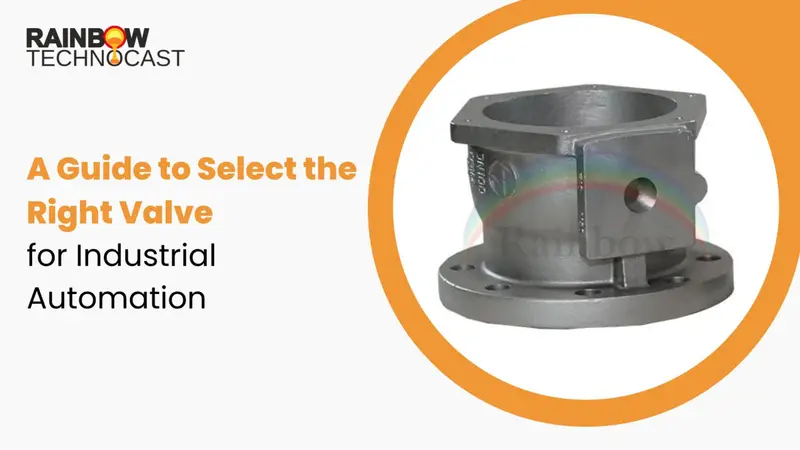
Valve leakage classifications represent one of the most critical yet often overlooked specifications in industrial valve selection. The difference between choosing the right or wrong leakage class can mean the distinction between optimal process efficiency and costly downtime, product contamination, or even safety hazards. Through the standardized ANSI/FCI 70-2 framework, engineers have precise metrics to evaluate valve performance under pressure, enabling informed decisions that align with specific application requirements.
The Critical Role of Valve Leakage Classes in Industrial Applications
In today’s high-stakes industrial environments, absolute valve shutoff is more theoretical than practical. Every valve, regardless of quality, will exhibit some degree of leakage when closed. The real question isn’t whether your valve will leak, but rather how much leakage your process can tolerate. This seemingly small detail can have enormous implications for process integrity, safety compliance, and operational costs.
The valve leakage classification system standardized by ANSI/FCI 70-2 (formerly ANSI B16.104) provides a structured approach to quantifying and communicating acceptable leakage rates. This framework allows engineers, procurement teams, and maintenance professionals to speak the same language when specifying valve requirements, ensuring that installed components meet the demands of their specific applications.
Consider this: a valve that leaks just 0.5% of its rated capacity might be perfectly acceptable for general industrial processes, while the same leakage rate would be catastrophic in pharmaceutical manufacturing or chemical processing involving hazardous materials. Understanding these nuances is essential for making informed decisions that protect both operational efficiency and safety standards.

Understanding Valve Leakage: Definitions and Industry Standards
Valve leakage refers to the passage of fluid through a valve in its fully closed position. Despite engineering advances, achieving absolute zero leakage remains elusive in practical industrial applications. Instead, industry standards provide classifications that define acceptable leakage rates for different scenarios.
The primary standard governing control valve seat leakage is ANSI FCI 70-2, which “establishes six classes of seat leakage for control valves” and defines “specific test procedures to determine the appropriate class”. This standard has superseded the older ANSI B16.104 specification but maintains the same fundamental approach to leakage classification.
Complementing this, the FCI 70-3 standard applies specifically to “pilot operated and direct acting pressure reducing, pressure relieving (back pressure), differential pressure and temperature regulators”. A notable recent update to this standard includes the addition of Class VIII, a “no permissible leakage” or “bubble tight” standard for resilient seating regulators.
These standards are internationally recognized and provide the benchmark against which valve performance is measured. By understanding these classifications, you can make informed decisions about which valves will meet your specific process requirements without overspecifying and incurring unnecessary costs.
Overview of ANSI/FCI 70-2 Leakage Classifications
The ANSI/FCI 70-2 standard establishes a progressive series of six seat leakage classes for control valves, each with specific testing procedures and allowable leakage rates. These classifications provide a standardized framework for communicating valve performance expectations between manufacturers and end users.
What makes this system particularly valuable is its nuanced approach to different valve designs and applications. Rather than imposing a one-size-fits-all standard, the classification system acknowledges that different processes have different leakage tolerance thresholds. This allows engineers to select valves that provide just the right level of leakage control for their specific application, optimizing both performance and cost.
The standard defines testing conditions, including medium (typically air or water), temperature ranges (generally 50-125°F or 10-52°C), and test pressures (45-60 psig or maximum operating differential, whichever is lower). These standardized testing parameters ensure consistent and comparable results across different valve manufacturers and models.
Detailed Examination of Each Leakage Class (Class I to Class VI)
Class I: The Baseline Standard
Class I is commonly known as “dust tight” and “can refer to metal or resilient seated valves”. This classification represents the most basic level of leakage control, with no specific test required if the user and supplier agree. It serves as a starting point for applications where precise leakage control is not critical.
Class II: Commercial Double-Seat Performance
Class II “establishes the maximum permissible leakage generally associated with commercial double-seat control valves or balanced single-seat control valves with a piston ring seal and metal-to-metal seats”. The allowable leakage rate is 0.5% of rated capacity, tested with air or water at 50-125°F (10-52°C). This class is suitable for general industrial applications where some leakage is acceptable.
Class III: Enhanced Tightness
Class III maintains the same testing conditions as Class II but reduces the allowable leakage to 0.1% of rated capacity. It “establishes the maximum permissible leakage generally associated with Class II, but with a higher degree of seat and seal tightness”. This class strikes a balance between improved leakage control and cost-effectiveness.
Class IV: Metal-to-Metal Precision
Class IV is commonly referred to as “metal to metal” and represents “the kind of leakage rate you can expect from a valve with a metal shut-off disc and metal seat”. The allowable leakage is further reduced to 0.01% of rated capacity. This class is “generally associated with commercial unbalanced single-seat control valves and balanced single-seat control valves with extra tight piston rings or other sealing means and metal-to-metal seats”.
Class V: Critical Applications
Class V takes a different approach to measurement, specifying leakage as “0.0005 ml per minute of water per inch of port diameter per psi differential”. This class “is usually specified for critical applications where the control valve may be required to be closed, without a blocking valve, for long periods of time with high differential pressure across the seating surfaces”. It “requires special manufacturing, assembly and testing techniques” and is “generally associated with metal seat, unbalanced single-seat control valves or balanced single-seat designs with exceptional seat and seal tightness”.
Class VI: Soft Seat Superiority
Class VI is known as a “soft seat classification” where “the seat or shut-off disc or both are made from some kind of resilient material such as Teflon”1. This class “establishes the maximum permissible seat leakage generally associated with resilient seating control valves either unbalanced or balanced single-seat with ‘O’ rings or similar gapless seals”. The testing is conducted with air or nitrogen, and the allowable leakage is based on port diameter.
Factors Influencing Leakage Class Selection
Selecting the appropriate valve leakage class requires considering multiple factors that extend beyond simple leakage rates. Process conditions, safety requirements, regulatory compliance, and economic considerations all play crucial roles in determining which leakage class is most appropriate for a specific application.
- Process Medium Characteristics: The type of fluid being controlled significantly impacts leakage tolerance. Hazardous, toxic, or expensive media typically demand tighter leakage classes (Class V or VI), while general utility services might function adequately with Class II or III valves.
- Operating Conditions: Higher pressures and temperatures can exacerbate leakage issues and may necessitate higher leakage classes. Similarly, cycling frequency and service life expectations should factor into your selection process.
- Safety and Environmental Concerns: Applications involving hazardous materials demand stricter leakage control to prevent environmental contamination or worker exposure. In these scenarios, the cost difference between leakage classes becomes secondary to safety considerations.
- Economic Considerations: Higher leakage classes typically come with higher price tags. The challenge is finding the optimal balance between initial investment and long-term operational costs. Remember that a valve that leaks excessively can result in product loss, energy inefficiency, and increased maintenance requirements.
- Valve Design and Construction: Different valve types inherently achieve different leakage rates. For instance, obtaining Class VI performance typically requires soft seats, while metal-seated valves are generally limited to Class IV or V at best under normal circumstances.
Application Scenarios: Matching Leakage Classes to Industry Needs
General Industrial Processes (Class I-III)
For general utility services and non-critical applications, Class I through III valves often provide adequate performance. These include basic water systems, low-pressure air lines, and processes where minor leakage won’t significantly impact operations or product quality. The cost advantage of these lower leakage classes makes them attractive for high-volume, non-critical installations.
Critical Process Control (Class IV)
Class IV valves find their niche in more demanding industrial applications where improved leakage control is necessary but absolute shutoff isn’t critical. These include many chemical processing lines, food and beverage production, and general manufacturing processes. The 0.01% maximum leakage rate strikes a balance between performance and cost that suits many intermediate applications.
High-Stakes Operations (Class V)
When valves must maintain closure for extended periods under high differential pressure, Class V becomes essential. This class is particularly important in refining operations, critical chemical processes, and applications where even minimal leakage could cause significant issues. Companies like “NASA, Tesla, 3M, Pfizer, Kraft, Dow and GE rely on [these] valves in critical processing environments”.
Zero-Tolerance Applications (Class VI)
The highest standard of leakage control is essential in pharmaceutical manufacturing, semiconductor production, and processes involving highly toxic or hazardous materials. Class VI valves, with their resilient seating materials, provide the nearest approximation to absolute shutoff that’s practically achievable in industrial settings.
Testing Procedures and Compliance Requirements
The effectiveness of valve leakage classifications hinges on standardized testing procedures that ensure consistency across manufacturers and applications. Understanding these testing protocols helps engineers validate compliance and make fair comparisons between different valve options.
For Classes II through IV, testing typically involves applying “pressure to valve inlet with outlet open to atmosphere or connected to a low head loss measuring device” with “full normal closing thrust provided by actuator”. The test medium is generally “air or water at 50-125°F (10-52°C)” with test pressure at “45-60 psig or max. operating differential, whichever is lower”.
Class V testing introduces more stringent requirements, using water as the test medium and measuring extremely small leakage rates. Class VI testing uses “air or nitrogen at 50 to 125°F (10 to 52°C)” with allowable leakage rates determined by port diameter.
Compliance verification may involve visual inspection, bubble testing, or precise measurement of collected leakage over a specified period. To ensure reliable results, testing should be conducted by qualified personnel using calibrated equipment in controlled environments.
Rainbow Technocast’s Commitment to Quality and Compliance
Companies like Rainbow Technocast exemplify the industry’s commitment to quality and standards compliance. Their testing facilities include “a variety of destructive and non-destructive testing facilities that help ensure the consistent quality of the castings”.
Their capabilities include “vacuum based spectrometer and a CCD based spectrometer to analyze the molten metal bath composition” along with “universal tensile testing machine, Rockwell hardness tester and Brinell hardness tester” for destructive testing. For non-destructive evaluation, they utilize “liquid/die penetrant test, magnetic particle inspection test and Radiography test”.
Particularly relevant to valve leakage, Rainbow Technocast employs “hydro pressure testing machines to test pressurized components for any leakage. Thus ensuring castings that would not fail under desired operating conditions”. Their impressive array of certifications, including “API 20-A, ISO 14001, ISO 45001, ISO 9001, PED 2014/68/EU, AD 2000-Merkblatt WO, LLOYD’S REGISTER (MARINE), NORSOK M650, IBR”, demonstrates their commitment to meeting international standards.
Conclusion: Making Informed Decisions for Optimal Valve Performance
Selecting the appropriate valve leakage class ultimately comes down to understanding your specific application requirements and balancing performance needs against economic constraints. While it may be tempting to always specify the tightest possible leakage class, this approach can lead to unnecessary expenses without providing tangible benefits.
Instead, take a systematic approach: analyze your process conditions, identify the consequences of potential leakage, consider regulatory requirements, and then select the leakage class that provides adequate protection without excessive cost. Remember that different valves within the same system may require different leakage classes based on their specific functions and locations.
The standardized framework provided by ANSI/FCI 70-2 gives you a powerful tool for communicating precise requirements and ensuring that the valves you select will perform as expected in your application. By mastering this system, you can make informed decisions that optimize both performance and value, ensuring that your industrial processes run smoothly, safely, and efficiently.