
Introduction
Every gear pump failure starts with one overlooked component. Whether you’re running a hydraulic system, chemical transfer line, or lubrication circuit, understanding what’s inside your pump determines uptime versus costly downtime. Gear pumps move fluid through meshing gears that trap and push liquid from inlet to outlet. Simple in concept, but the devil lives in the details.
Most buyers focus only on flow rate and pressure specs. That’s a mistake. The longevity and efficiency of your pump depend entirely on how its seven core components work together under stress. A weak bearing can destroy an entire assembly. A poorly designed housing creates cavitation that kills performance.
This guide breaks down each critical part, explains what it does, and shows you why component quality separates reliable pumps from expensive problems. You’ll learn the function of every piece, recognize warning signs of failure, and make smarter purchasing decisions that protect your operations.
How Gear Pumps Work
Gear pumps operate on a displacement principle. Two gears rotate inside a sealed housing. As the gears unmesh at the inlet, they create expanding volume that pulls fluid in. The teeth carry this fluid around the outer edges of the housing. When gears mesh again at the outlet, they force fluid out under pressure.
External gear pumps use two identical gears. Internal gear pumps place a smaller gear inside a larger one, with a crescent seal separating inlet from outlet. Both designs create consistent, pulse-free flow ideal for viscous fluids like oils, resins, and polymers.
The 7 Essential Components
Drive Gear
The drive gear connects directly to your motor or engine. It receives rotational power and determines pump speed. This gear meshes with the driven gear to initiate fluid movement. Drive gear tooth profile affects efficiency—helical cuts run quieter than spur cuts but cost more.
Material selection matters here. Hardened steel handles abrasive fluids. Bronze works for corrosive chemicals. Your drive gear takes the most stress in the system.
Driven Gear (Idler Gear)
The driven gear rotates opposite to the drive gear without direct power connection. It mirrors the drive gear’s motion, creating the pumping chambers between teeth. Precise gear matching prevents backflow and maintains volumetric efficiency.
Gap tolerance between gears determines slip. Tighter tolerances improve efficiency but increase wear. Finding this balance separates premium components from budget parts.
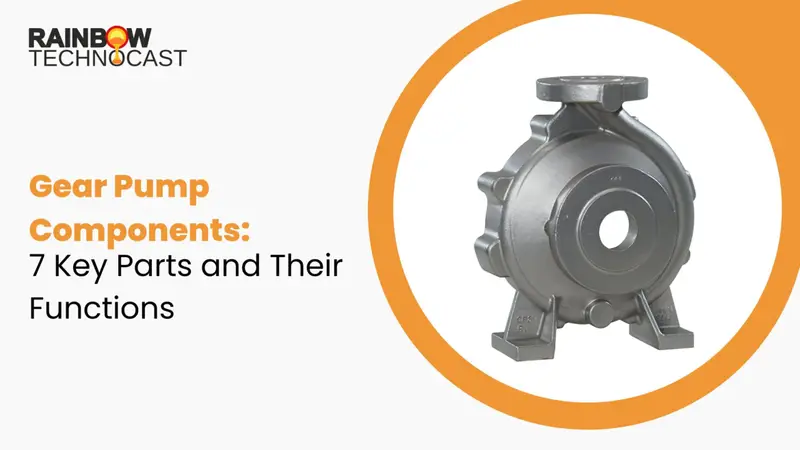
Pump Housing (Casing)
The housing contains all internal components and channels fluid from inlet to outlet. It provides structural support and maintains alignment under pressure. Quality housings resist deformation even when handling fluids at high temperatures.
Cast iron suits most industrial applications. Stainless steel prevents contamination in food and pharmaceutical systems. Housing wall thickness directly impacts pressure ratings—thin walls fail catastrophically.
Shafts
Shafts transmit torque from the motor to the gears. They must resist bending, torsional stress, and radial loads from gear meshing. Shaft misalignment causes premature bearing failure and uneven gear wear.
Most failures happen at shaft seals where fluid tries to escape. Proper shaft diameter and surface finish extend seal life significantly.
Bearings
Bearings support the rotating shafts and control gear position. They absorb radial and thrust loads while minimizing friction. Bearing failure is the leading cause of gear pump breakdown—often from contaminated fluid or inadequate lubrication.
Ball bearings suit light-duty applications. Roller bearings handle heavier loads. Some designs use the pumped fluid itself for bearing lubrication, eliminating external grease points.
Inlet Port (Suction Side)
The inlet port draws fluid into the pump as gears unmesh. Port size affects flow velocity and cavitation risk. Too small, and you create vacuum conditions that starve the pump. Fluid vapor bubbles collapse violently inside, eroding metal surfaces.
Proper inlet piping—short runs, minimal elbows, adequate diameter—prevents 90% of suction-side problems. Yet most installations ignore this completely.
Outlet Port (Discharge Side) and Relief Valve
The outlet port expels pressurized fluid as gears mesh together. Built-in pressure relief valves protect against deadheading—when discharge is blocked and pressure spikes dangerously. Without relief, housings crack and seals blow out.
Relief valve cracking pressure should match your system’s maximum operating pressure plus a safety margin. Many pumps ship with factory settings inappropriate for your application.
Seals and Gaskets: The Unsung Heroes
Seals prevent external leakage where shafts exit the housing. Mechanical seals suit high-pressure systems. Lip seals work for lower pressures. Seal material must resist your fluid chemistry—nitrile for petroleum, Viton for acids, PTFE for solvents.
Internal gaskets seal the housing halves. They maintain separation between suction and discharge sides. Gasket failure causes internal bypass that kills efficiency without visible leaks. You lose performance gradually until the pump can barely move fluid.
Selecting the Right Components
Here’s an uncomfortable truth: most pump failures stem from wrong component selection, not manufacturing defects. Buying the cheapest option guarantees expensive problems later.
Match materials to your fluid. Verify pressure and temperature ratings. Confirm shaft seal compatibility. Ask about bearing type and expected service life. Quality manufacturers provide complete specifications. Vague answers signal trouble.
Replacement parts must meet original specifications exactly. “Close enough” creates imbalance, vibration, and rapid wear. Aftermarket components without proper testing destroy pumps routinely.
Maintenance Best Practices
Monitor bearing temperature and vibration. Rising heat signals impending failure. Check for leaks at shaft seals—even small drips indicate degradation. Listen for unusual noise that suggests gear wear or cavitation.
Change filters regularly. Contaminated fluid acts like grinding paste on precision surfaces. Maintain proper inlet conditions. Most “pump failures” actually stem from starved suction or contaminated fluid.
Conclusion
Understanding these seven components transforms you from passive buyer to informed decision-maker. Every part matters. Every specification has consequences. Cutting corners on component quality costs far more in downtime, repairs, and replacement than investing properly upfront.
Choose components built right the first time. Your operations depend on it.
Rainbow Technocast delivers precision-engineered gear pump components that outlast and outperform standard alternatives. Our casting expertise ensures dimensional accuracy, material integrity, and consistent quality across every part. From housings to gears, we manufacture components that handle real-world stress without compromise.
Contact Rainbow Technocast today to discuss your gear pump requirements. Let us show you how superior components reduce your total cost of ownership. Visit rainbowtechnocast.thinkingstation.com/ or reach out directly—we’re ready to support your success.