
Introduction
Most pump failures don’t start with mechanical breakdown. They start in the foundry where critical components are cast. A housing with hidden porosity. An impeller with uneven wall thickness. A valve plate with improper heat treatment. These defects remain invisible until your system is under full load, fluid is flowing, and pressure peaks.
The difference between reliable operation and catastrophic failure often traces back to foundry quality. Centrifugal and hydraulic pumps demand castings that withstand extreme pressures, corrosive fluids, and thermal cycling. Generic foundry work produces generic results—dimensional drift, material inconsistency, and premature wear.
This guide examines the essential casting components for both pump types, explains why foundry expertise matters more than most buyers realize, and shows you what separates acceptable castings from precision-engineered parts. You’ll understand which materials suit your application, how manufacturing processes affect performance, and why cutting corners on foundry quality guarantees expensive problems later.
Centrifugal Pump Castings
Pump Casings and Volutes
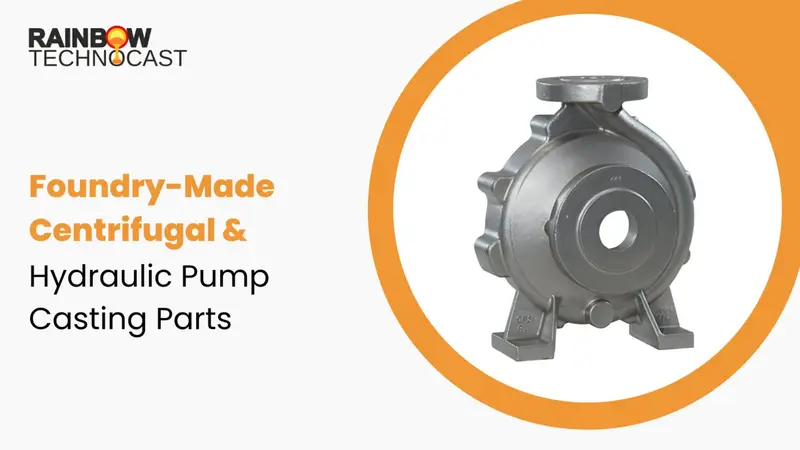
The casing contains all internal components and directs fluid flow from impeller to discharge. Volute design converts velocity energy into pressure energy. Poor casting creates rough internal surfaces that increase friction losses and reduce efficiency.
Wall thickness variation causes stress concentration points. Thermal expansion becomes uneven. Bolt holes misalign during installation. These aren’t minor inconveniences—they’re operational failures waiting to happen.
Impellers
Impellers transfer rotational energy to the fluid through precisely shaped vanes. Casting defects here destroy performance immediately. Surface roughness creates turbulence. Unbalanced mass causes vibration that damages bearings and seals.
Investment casting produces smoother surfaces than sand casting but costs more. For high-efficiency pumps, that cost pays back through reduced energy consumption and longer service life.
Wear Plates and Diffusers
Wear plates protect casings from abrasive fluids. They’re sacrificial components designed for replacement. Material selection matters—white iron resists abrasion but chips under impact. Ni-Hard alloys balance toughness with wear resistance.
Diffusers convert kinetic energy into pressure in multistage pumps. Casting precision directly affects hydraulic efficiency. Even small dimensional errors create recirculation losses that kill performance.
Hydraulic Pump Castings
Gear and Piston Housings
Hydraulic pump housings must maintain tight tolerances under extreme pressure. Internal surfaces require precision machining after casting. A rough casting with excessive material wastes machining time. Insufficient material means scrapping the entire part.
Ductile iron provides strength with some ductility. Aluminum alloys reduce weight for mobile hydraulic systems. Material choice depends on operating pressure, fluid temperature, and required service life.
Valve and Port Plates
These components control fluid direction and timing in hydraulic systems. Surface flatness is critical—even 0.001-inch waviness causes internal leakage that reduces volumetric efficiency.
Here’s an uncomfortable truth: most foundries can’t hold the tolerances hydraulic valve plates require. They cast parts that barely pass initial inspection but fail quickly under operating conditions. Precision foundry work costs more upfront but eliminates the hidden costs of rework, warranty claims, and field failures.
Bearing Housings
Bearing housings support rotating shafts and absorb radial loads. Casting defects near bearing bores create stress risers that propagate cracks. Many “bearing failures” actually stem from housing failures that go undiagnosed.
Material Selection Strategy
Material choice determines pump longevity more than any other factor. Gray iron suits moderate pressures and temperatures. Ductile iron handles higher stresses. Stainless steel resists corrosion but costs significantly more.
The mistake most buyers make: selecting materials based solely on initial cost. A gray iron casing might save 30% over ductile iron. But if it fails in two years instead of ten, you’ve lost money on downtime, replacement, and labor.
Match materials to your specific conditions:
- Freshwater systems: cast iron works fine
- Seawater or chemicals: stainless steel or bronze
- High temperature: alloy steels with proper heat treatment
- Abrasive slurries: wear-resistant alloys in critical zones
Foundry Processes That Matter
Sand Casting vs. Investment Casting
Sand casting produces larger components economically. Surface finish is rougher, requiring more machining. Dimensional tolerances are wider. It’s the right choice for pump casings, large housings, and components where internal surface quality is less critical.
Investment casting delivers superior surface finish and tighter tolerances. Use it for impellers, complex valve plates, and any component where casting precision directly affects hydraulic performance.
Centrifugal Casting for Cylindrical Parts
Centrifugal casting creates dense, uniform structures ideal for cylindrical components like shaft sleeves and wear rings. The process eliminates centerline porosity common in static casting. Material properties improve through centrifugal force consolidation.
Quality Control Reality
ISO 9001 certification means a foundry has documented processes. It doesn’t guarantee quality—just consistency. You need foundries that perform non-destructive testing, dimensional verification, and metallurgical analysis on every production batch.
Ask potential suppliers specific questions:
- What NDT methods do you use routinely?
- How do you verify material composition?
- What’s your defect rate on complex geometries?
- Can I see metallurgical reports from recent production?
Vague answers indicate problems. Quality foundries welcome detailed technical discussions.
Maintenance and Inspection
Inspect castings before installation. Look for visible porosity, surface cracks, and dimensional accuracy. Check machined surfaces for proper finish. Verify bolt hole alignment.
During operation, monitor for unusual vibration, leaks, or efficiency loss. These often signal casting defects that weren’t caught initially. Early detection prevents catastrophic failures.
Conclusion
Foundry quality determines pump reliability. Every casting defect becomes an operational risk. Choosing components based solely on price guarantees you’ll pay more through failures, downtime, and emergency replacements. Invest in precision foundry work upfront.
Start making better purchasing decisions today—question your current suppliers about their foundry processes and quality standards.
Rainbow Technocast manufactures centrifugal and hydraulic pump castings with foundry precision that eliminates common failure modes. Our advanced metallurgy, process controls, and dimensional verification ensure every component meets specifications exactly. From gray iron housings to stainless impellers, we deliver castings that perform reliably under real-world stress.
Contact Rainbow Technocast now to discuss your pump casting requirements. We’ll match materials to your specific conditions, recommend optimal casting processes, and deliver components that reduce your total cost of ownership. Visit rainbowtechnocast.thinkingstation.com/ or reach out directly—let’s solve your casting challenges together.