
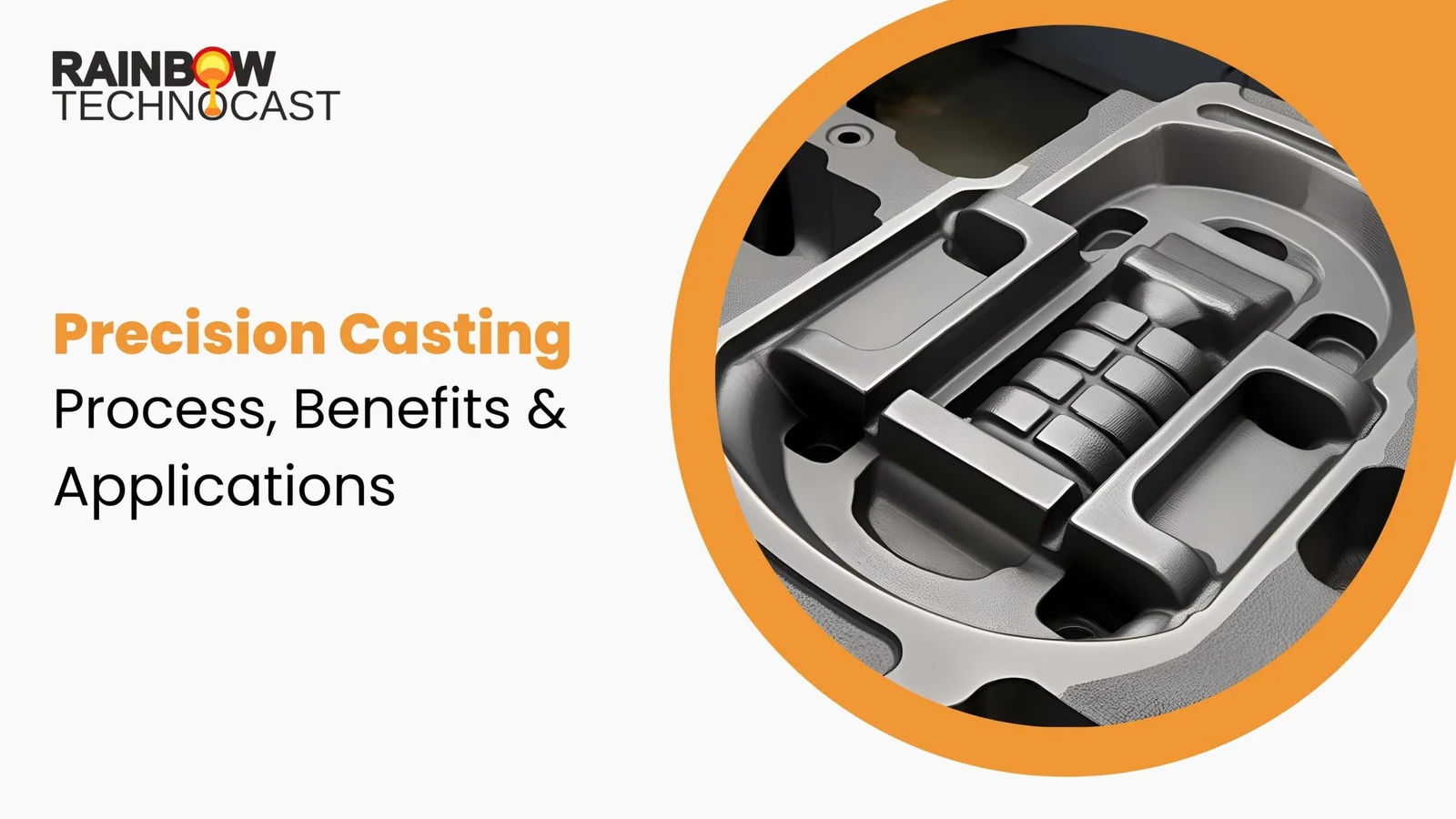
Typical thing, but precision is most imperative in the casting industry. Discover precision casting, often known as investment casting or the “lost wax” process, which transcends conventional limits to deliver intricate designs and high-quality finishes. This meticulous technique is a blend of art and science, where molten metal transforms into complex shapes, fulfilling the industry’s relentless need for precision and reliability.
This article explores the process, applications, and benefits of precision casting.
What is Precision Casting?
At its core, precision casting is a metal shaping technique that involves creating a wax pattern of the desired component, coating it with a refractory material to form a mold, and then filling this mold with molten metal. The result is a near-net-shaped product characterized by exceptional surface finish and intricate details. This method has roots tracing back to ancient civilizations, making it one of the longest-running advanced metal-shaping processes in human history.
This casting method stands out due to its ability to produce intricate shapes, often with undercuts and fine details that may be challenging or impossible to achieve with other casting methods. Investment casting is a versatile manufacturing process suitable for a vast range of ferrous and non-ferrous alloys, making it the preferred choice for components where precision of form is critical.
Historical Context
The history of investment casting dates back thousands of years, with evidence suggesting its use as far back as the Bronze Age. Over the centuries, the technique changed. First used for artistic purposes and simple tools, it has made a place in the essentials of modern manufacturing processes across various sectors including aerospace, automotive, and medical devices.
The Precision Casting Process
The precision casting process can be broken down into several key steps:
Mold Design
The journey begins with mold design, where engineers create precise molds tailored to specific requirements. This step is crucial as it sets the foundation for achieving high accuracy in the final product.
Wax Injection
Next comes wax injection. A machine injects wax into the designed mold to create patterns that reflect the desired final product’s shape. This step is vital for ensuring that every detail is captured accurately.
Assembly Tree Formation
Once the wax patterns are created, they are assembled into a tree structure known as an assembly tree. A central wax stick called a sprue connects these patterns, allowing for efficient casting.
Shell Making
The assembly tree is then coated with a liquid ceramic slurry and sprinkled with sand to create a shell. This process may involve multiple layers—up to six or more—ensuring that the shell is robust enough to withstand the pouring of molten metal.
Dewaxing
After the shell has dried, it undergoes dewaxing. The ceramic shell is heated to melt away the wax inside, leaving behind a hollow mold ready for casting.
Casting
With the mold prepared, molten metal is poured into it. The metal adapts to the shape of the mold as it cools and solidifies into the desired form.
Knockout and Cut Off
After cooling, the ceramic shell is removed through a knockout process, which involves breaking or vibrating away most of the shell material. The cast parts are then cut from their central sprue using high-speed saws.
Finishing Touches
Finally, finishing touches are applied through grinding and polishing processes. These steps ensure that any remaining imperfections are addressed and that each component meets stringent quality standards.
Advantages of Precision Casting
Precision casting offers numerous advantages that make it an attractive option for manufacturers:
High Precision and Accuracy
One of its most significant benefits is the high degree of precision it provides. Components produced through this method can achieve tight tolerances and complex geometries with minimal post-processing required. This capability allows manufacturers to save both time and costs while ensuring quality.
Material Versatility
It accommodates various materials including steel, aluminum, copper, and more. This versatility enables manufacturers to select materials that best suit their specific applications without compromising on quality or performance.
Cost-Effectiveness
By minimizing waste through near-net-shape production and reducing extensive machining needs, it proves to be cost-effective in both material usage and labor costs.
Sustainability Aspect
Investment casting contributes positively by reducing material waste compared to other methods. This intricate process enables the creation of parts with thin walls, fine details, and excellent surface finishes, which translates into less wasted material during production.
Applications of Precision Casting
Investment casting finds applications across various industries due to its unique capabilities:
Aerospace Components
In aerospace manufacturing, it is essential to produce components like turbine blades that require high strength-to-weight ratios and intricate designs capable of withstanding extreme conditions.
Automotive Parts
The automotive industry relies on investment casting for engine components such as cylinder heads and manifolds where accuracy directly impacts performance and efficiency.
Medical Devices
In medical equipment manufacturing, investment casting enables the creation of surgical instruments and implants that require both high precision and biocompatibility.
Emerging Trends
Innovations in materials science and automation are expanding application potential even further. For instance, new alloys are being developed for investment casting processes that boost performance in demanding environments.
Conclusion
Precision casting plays an indispensable role in modern manufacturing by delivering intricate designs with unmatched accuracy. Its historical significance combined with its contemporary applications makes it a fascinating field for enthusiasts eager to learn more about metal shaping technologies. For those intrigued by this artful blend of craftsmanship and technology, further exploration can open doors to understanding how industries innovate and maintain high-quality standards.