
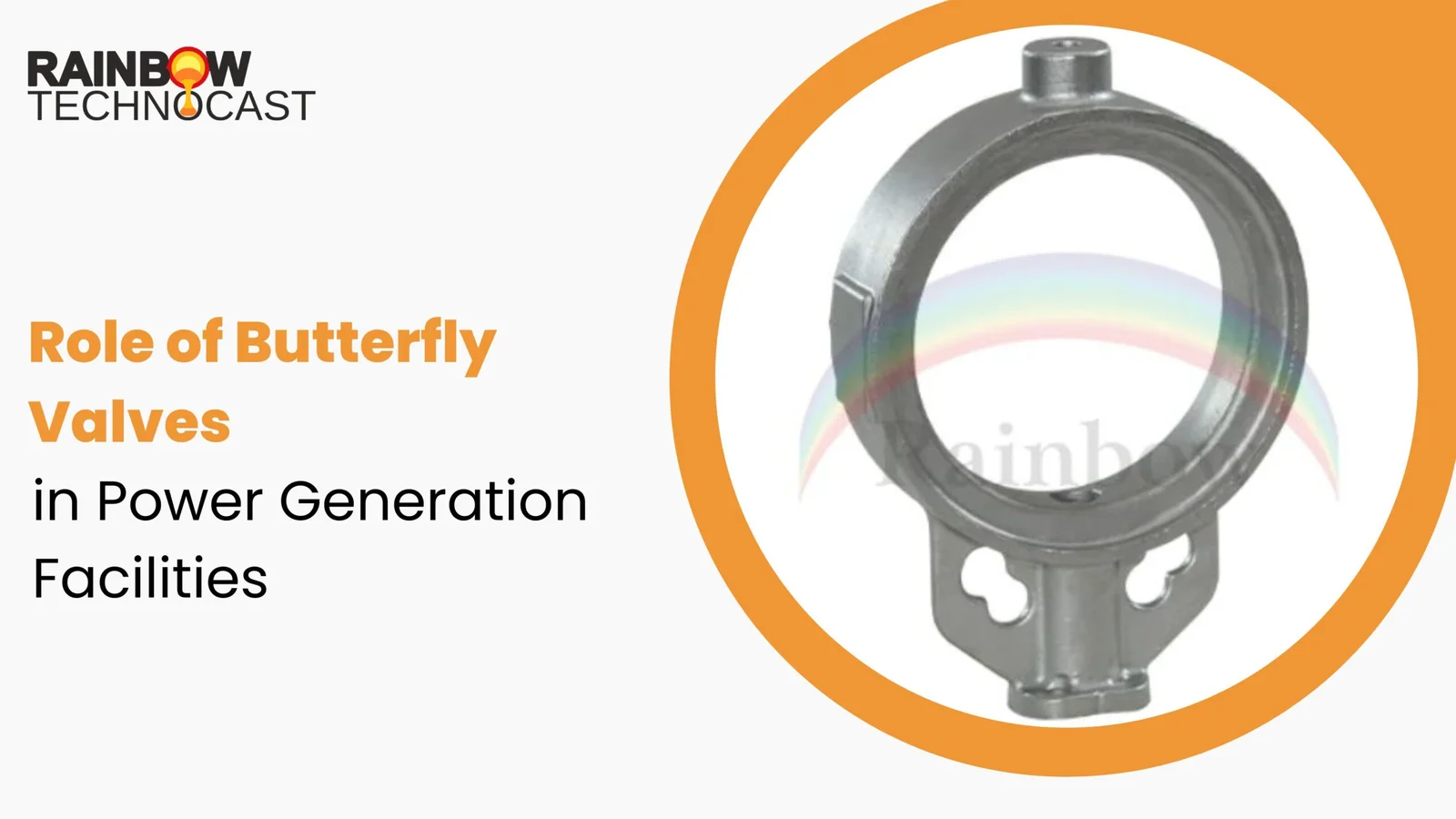
In the labyrinth of turbines, condensers, and steam pipelines that make up modern power generation plants, there exists a family of components whose simplicity belies their significance: valves. And among these, butterfly valves are often the unsung heroes. With their disc-like mechanism and quick quarter-turn actuation, they may not look like much, but their role is fundamental to managing flow, maintaining pressure, and optimizing thermal cycles. At the heart of systems moving thousands of gallons per minute, butterfly valves quietly govern the fluid dynamics that keep lights on across continents.
India alone expects to add over 80 GW of new power capacity by 2030, heavily leaning on thermal and hybrid power systems. In these ecosystems, even the slightest inefficiency in flow regulation can lead to cascading consequences. The butterfly valve’s role in balancing thermal loads, controlling emissions, and safeguarding turbines is more vital than ever. “They might appear basic, but butterfly valves are precision tools where it counts,” notes one thermal systems engineer at NTPC, India’s largest power utility.
Decoding Butterfly Valves: Compact Yet Critical
Let’s demystify this crucial component. A butterfly valve consists of a rotating disc mounted on a rod, operating within a cylindrical body. It rotates a quarter turn to open or close the passage. But simplicity does not mean limitations. In power generation applications, these valves handle extreme pressure, temperature fluctuations, and aggressive media like superheated steam or cooling water with astonishing reliability.
The compact profile is a game-changer. Unlike bulky globe or gate valves, butterfly valves require less space, are easier to automate, and offer rapid response times—especially critical during emergency shutdowns or turbine trips. This makes them ideal for applications such as condenser vacuum control, boiler feed systems, and air regulation in FGD (Flue Gas Desulfurization) units.
A valve’s responsiveness and leakage resistance are what determine the efficiency and safety of a power plant. According to engineering design guides from the Electric Power Research Institute (EPRI), high-performance butterfly valves now deliver Class VI leakage tightness—approaching the performance levels of triple-offset valves at a fraction of the cost.
Core Functions of Butterfly Valves in Power Plant Systems
In a power plant, everything is about moving and converting energy efficiently. Here, butterfly valves serve as flow regulators, isolation devices, and even pressure balancing components. They’re found across key subsystems:
- Cooling water intake and discharge loops: Butterfly valves regulate flow to and from cooling towers.
- Air and flue gas control: Especially in pollution control setups like ESPs and scrubbers.
- Condenser and heat exchanger units: Ensuring safe pressure regulation and optimized heat transfer.
- Auxiliary water systems: Including firefighting, lube oil cooling, and chemical dosing.
When power plants shift load rapidly, especially in peak demand hours, valve responsiveness becomes critical. Butterfly valves, due to their fast-acting capability, help stabilize operation. If the valve sticks or delays, it can cause pressure surges, mechanical fatigue, or even plant shutdowns.
Thermal, Pressure, and Flow Realities in Power Applications
It’s easy to underestimate what these valves go through daily. Steam lines often exceed 500°C and operate at pressures above 100 bar. Even in cooling water circuits, flow velocities surpass 4.5 m/s, which induces cavitation and erosive wear.
This is where metallurgy and design geometry intersect. A butterfly valve’s internal disc must be shaped to minimize turbulence. According to a study in Journal of Thermal Engineering, streamlined elliptical discs reduce flow resistance by over 22% compared to flat profiles. Meanwhile, seal integrity must hold even as metal expands due to thermal cycling.
And then there’s the issue of differential pressure during transient loads. When turbine load is dropped or ramped up rapidly, valves must resist “water hammer” effects—sudden pressure waves that can shatter lesser components. This is why triple-offset and double-eccentric butterfly valves are often specified in turbine bypass lines.
Precision Casting and Its Impact on Butterfly Valve Performance
Performance isn’t just about design; it’s about how that design is brought to life. That’s where precision casting steps in—a core strength of Rainbow Technocast. In butterfly valves, precision casting ensures that the valve body and disc geometry are accurate to within microns. This guarantees minimal leakage paths, optimal sealing surface alignment, and repeatable performance across pressure cycles.
Investing in near-net-shape casting reduces the need for secondary machining and preserves material integrity, particularly for exotic alloys like duplex stainless steel or Inconel, commonly used in high-pressure zones.
“Dimensional stability and surface smoothness are not cosmetic; they’re functional,” says a valve design head at a major turbine OEM. Rainbow Technocast’s use of investment casting ensures internal flow surfaces that resist scaling and erosion—directly translating into longer service life and reduced maintenance cycles.
Material Science Behind Durability and Efficiency
Power plants are not gentle environments. The materials used in butterfly valves must resist corrosion from saline water, withstand scaling due to mineral-rich boiler feed, and tolerate rapid thermal expansion. This calls for metallurgical intelligence.
For instance, super duplex steels are employed in sea water-cooled plants due to their high chromium and molybdenum content. In coal-fired systems, high-nickel alloys prevent sulfuric acid corrosion post-combustion. Rainbow Technocast sources and processes these materials with rigorous quality control, aligning with ASME and ASTM standards.
Surface treatments like electroless nickel plating or thermal spray coatings add another layer of resilience. These aren’t marketing gimmicks; they’re the thin line between a valve that lasts three years and one that endures a decade.
Challenges Faced by Valve Components in High-Stress Environments
In real-world settings, butterfly valves are exposed to a parade of abuse:
- Abrasive particles from raw water or ash slurry.
- Vibration-induced fatigue due to turbine harmonics.
- Frequent actuation cycles during load variation.
- Chemical degradation from cleaning agents and fuel residues.
A report from Bharat Heavy Electricals Limited (BHEL) outlined that over 30% of emergency turbine trips in older thermal plants were traced back to valve failures or leaks. This underscores why proper design, casting, and material selection are not luxuries but necessities.
Engineering Advancements: How Rainbow Technocast Optimizes Performance
Rainbow Technocast isn’t just manufacturing components; it’s engineering reliability. The company integrates computational fluid dynamics (CFD) in prototype validation, ensuring that butterfly valve geometries behave as intended under dynamic load.
Using automated shell building, ceramic mold precision, and vacuum-assisted casting, Rainbow ensures that valves used in high-performance zones leave zero room for micro-porosity or structural defects.
This approach isn’t just smart—it’s strategic. By combining smart manufacturing with metallurgical expertise, Rainbow is addressing one of the biggest pain points in the industry: downtime due to component failure.
Regulatory Standards and Compliance in Power Plant Valves
Power generation valves aren’t plug-and-play devices. They must conform to stringent codes and specifications, including:
- API 609 for butterfly valve design.
- EN 593 for industrial applications.
- BIS/IS 13095 for pressure testing and safety.
Third-party validation is increasingly a requirement for government and private utility projects. Rainbow Technocast’s castings meet global specifications, ensuring that OEMs and EPCs can fast-track compliance documentation during tendering and commissioning.
Emerging Trends: Smart Monitoring and Predictive Maintenance
The age of Industry 4.0 is transforming even static components like valves. Smart sensors are now being integrated into actuator heads to monitor position, torque, cycle count, and even seal wear over time. Predictive maintenance tools, powered by AI, analyze these datasets to pre-empt failures.
Butterfly valves in modern combined-cycle gas plants are becoming as intelligent as they are rugged. “We’re seeing butterfly valves talking to control rooms through IIoT networks,” says one senior controls engineer at Siemens Power.
This opens up new business models where valves are not sold, but serviced over a lifecycle contract. Rainbow Technocast is future-proofing its casting capabilities by collaborating with actuator manufacturers on co-designed housings that integrate such smart tech.
Strategic Takeaways for Plant Designers and Procurement Heads
Butterfly valves are more than components; they are strategic enablers of uptime, energy efficiency, and regulatory compliance. Choosing the right partner—like Rainbow Technocast—goes beyond price comparison. It’s about lifecycle thinking, customization, and future readiness.
Key takeaways:
- Precision casting directly affects sealing, efficiency, and reliability.
- Material choices must match fluid chemistry and thermal behavior.
- Smart butterfly valves offer data visibility, reducing unplanned downtime.
Conclusion: Building a Resilient Energy Future with Engineered Precision
As the world transitions toward more complex, hybrid energy systems, the butterfly valve must evolve from a background player to a precision asset. With rising temperatures, erratic load patterns, and stricter emissions norms, flow control is becoming a frontline engineering challenge.
Rainbow Technocast is meeting that challenge by crafting butterfly valve components that don’t just comply but compete—on durability, intelligence, and efficiency. Because in power generation, resilience isn’t just a trait. It’s a design choice.