
Introduction
Slurry handling breaks conventional valves fast. Abrasive particles tear through seals, solids jam between seats, and corrosive media corrodes bodies from the inside out. In one gold ore operation, traditional valves handling 40% solids slurry failed every seven to ten days, costing the company $43,000 monthly in downtime, repairs, and lost production.
Knife gate valves solve this problem with a sharp-edged gate that slices through thick, solid-laden media instead of pushing against it. Their full-bore design eliminates flow restrictions, and their robust construction handles the punishment that destroys ball and plug valves. This post explains why knife gate valves dominate slurry applications, how their cutting mechanism works, and what to look for when specifying them for mining, wastewater, pulp processing, and chemical plants.
Understanding Knife Gate Valves
Design Fundamentals
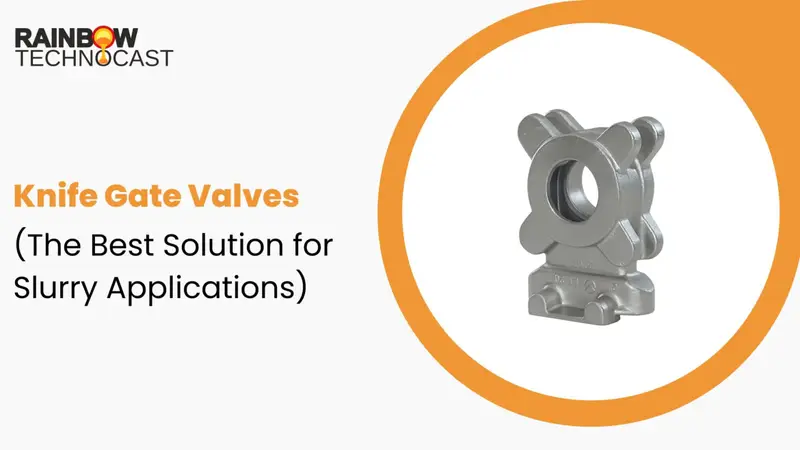
A knife gate valve uses a flat, sharp-edged gate that moves perpendicular to the flow path. When open, the gate retracts completely above the flow stream, creating an unobstructed bore. When closed, the gate’s knife edge cuts through suspended solids and seats against elastomer or metal seals to stop flow.
The gate travels vertically through packing glands that prevent leakage along the stem. Unlike wedge-style gate valves that require precise machining and gradual closure, knife gates use a simple guillotine action that works even when particles lodge in the flow path.
Operating Mechanism
The valve operates through linear motion controlled by a manual handwheel, pneumatic actuator, hydraulic cylinder, or electric motor. Opening lifts the gate out of the flow stream entirely. Closing drives it downward until the sharp edge contacts the seat material.
Here’s what makes this mechanism effective: the knife edge physically cuts through fibers, sludge, and suspended solids during closure. Conventional valves trap these materials between seating surfaces, preventing tight shutoff and accelerating wear.
Why Knife Gate Valves Excel in Slurry Service
The Slurry Challenge
Slurry contains abrasive particles that act like grinding media against valve internals. These particles erode seats, scratch gates, and destroy seals through repetitive contact. Service life for valves in highly abrasive ore and tailings applications averages just 12 to 36 months compared to 120 to 240 months in light-duty water service.
Dewaterred slurries present even harsher conditions. Pumping pressures spike dramatically, and thick consistency increases friction against sealing surfaces. Traditional knife gates designed for thin slurry cannot handle these loads.
How Knife Gates Address These Issues
- Full-bore opening: With the gate fully retracted, nothing obstructs flow. This design eliminates pockets where solids accumulate and minimizes pressure drop across the valve. Ball valves and plug valves create turbulence and dead zones that trap abrasive particles.
- Cutting action: The sharp gate edge slices through rope, paper pulp, mineral slurries, and sludge that would jam other valve types. This physical cutting prevents buildup on seating surfaces.
- Minimal internal components: Fewer parts mean fewer failure points. The gate, body, seat, and packing assembly constitute the entire wetted path—no complex linkages or bearings exposed to corrosive media.
- Bi-directional sealing options: Many designs seal against flow from either direction, providing flexibility in piping layouts. Uni-directional valves offer higher pressure ratings but must be installed correctly to prevent catastrophic damage from reverse flow.
Critical Applications
Knife gate valves handle slurry across multiple industries:
- Mining and mineral processing: Ore slurries, tailings transport, flotation circuits, and thickener underflow
- Wastewater treatment: Sludge handling, grit removal, and digester service
- Pulp and paper: Stock consistency control, fiber suspension, and waste liquor
- Chemical processing: Polymer slurries, catalyst handling, and process isolation
- Power generation: Ash handling systems and FGD scrubber service
Technical Specifications That Matter
Material Selection
Body materials include cast iron, ductile iron, carbon steel, and stainless steel grades 304, 316, and duplex alloys. Abrasive slurries require hardened gate surfaces—either through overlay welding, thermal spraying, or solid tungsten carbide inserts.
Seat materials range from nitrile and EPDM elastomers for mild service to reinforced urethanes and metal-to-metal seats for extreme abrasion. The wrong seat material fails quickly; the right one extends service life by multiples.
Pressure and Temperature Ratings
Standard knife gates handle pressures from 150 to 300 psi, with specialty designs rated to 450 psi. Temperature limits depend on elastomer compatibility—typically -20°C to 80°C for nitrile, up to 200°C for metal seats.
Dewatered slurry applications demand higher pressure ratings as pumping head increases. Undersizing pressure capacity leads to body cracking and catastrophic seal failure.
Stroke Precision
Knife gates require exact stroke completion for proper sealing. A valve rated for 400mm stroke that travels only 399mm can leak excessively because the gate doesn’t fully engage the seat. This sensitivity demands properly sized actuators with sufficient thrust and reliable position indication.
Advantages Over Conventional Valves
Knife gate valves outperform alternatives in slurry service:
- Lower maintenance costs: Simple design enables faster repairs and component replacement. In-line serviceable models reduce downtime by up to 95% compared to valves requiring complete removal.
- Extended service life: Purpose-built slurry gates with proper materials last significantly longer than adapted gate or ball valves.
- Smaller footprint: Short face-to-face dimensions conserve space in crowded piping systems.
- Cost efficiency: Lower initial cost and reduced lifecycle expenses make knife gates economical for large installations.
Installation and Maintenance Practices
Installation Guidelines
Mount valves with actuators accessible for service. Provide upstream strainers for slurries containing large debris that exceeds the valve’s size capability. Confirm flow direction matches uni-directional valve orientation to prevent reverse pressure damage.
Support piping independently—never use the valve as a structural member. Thermal expansion and vibration accelerate seat wear and misalign the gate.
Maintenance Essentials
Inspect packing glands regularly and adjust compression to prevent stem leakage. Most designs operate well with minimal stem lubrication, but complete neglect causes binding and excessive actuator loads.
Monitor actuator air supply pressure. Insufficient pressure reduces closure force, allowing abrasive slurry to leak past seats at high velocity, causing rapid seal destruction and body erosion. Clean valves after extended idle periods to remove hardened slurry deposits from the bore and gate surfaces.
Customization Options
Modern knife gates adapt to specific requirements:
- Actuation: Pneumatic actuators for rapid cycling, electric motors for remote operation, hydraulic cylinders for high-thrust applications
- Seals and coatings: PTFE liners for corrosive chemicals, ceramic coatings for extreme abrasion, cryogenic seals for low-temperature service
- Position monitoring: Limit switches, proximity sensors, and smart positioners for automated control systems
FAQs
What makes knife gate valves better than ball valves for slurry?
Ball valves have cavities between the ball and body that trap abrasive particles, causing seal wear and torque spikes. Knife gates provide full-bore flow with no dead zones and use a cutting action that clears the flow path during closure.
How long do knife gate valves last in highly abrasive service?
Service life varies from 12 to 36 months in severe ore and tailings applications with frequent cycling. Proper material selection, adequate actuator sizing, and regular maintenance extend this significantly.
Can knife gate valves handle bi-directional flow?
Many models feature bi-directional perimeter seals that work with flow from either direction. Uni-directional designs offer higher pressure ratings but require correct installation orientation.
What causes premature knife gate valve failure?
Common causes include insufficient actuator thrust preventing complete closure, incorrect seat material for the slurry type, reverse flow in uni-directional valves, and lack of position indication allowing incomplete stroke.
Do knife gate valves require special piping considerations?
They need shorter face-to-face clearance than conventional gate valves but require adequate upstream straight piping to avoid turbulent flow impacting closure. Independent pipe support prevents stress on the valve body.
How much can proper valve selection reduce downtime costs?
One mining operation reduced monthly downtime costs from $43,000 to near zero by switching to properly engineered knife gates. Quick-change designs can cut maintenance time and capital costs by up to 45%.
Conclusion
Knife gate valves dominate slurry service because their cutting action, full-bore design, and robust construction handle conditions that destroy conventional valves. Proper specification of materials, pressure ratings, and actuation prevents the premature failures that cost operations tens of thousands monthly in downtime and repairs. Start by matching valve construction to your slurry characteristics—abrasivity, solids content, and operating pressure determine material requirements more than any other factors.
Rainbow Technocast engineers and manufactures knife gate valves specifically for demanding slurry applications across mining, wastewater, pulp processing, and chemical industries. Our valves combine wear-resistant materials, precise machining, and field-proven designs to deliver extended service life in abrasive, solid-laden media.
Contact Rainbow Technocast today to discuss your slurry handling requirements and receive expert valve selection guidance tailored to your specific operating conditions. Visit rainbowtechnocast.thinkingstation.com/ or reach out to our technical team for detailed specifications and custom solutions.