
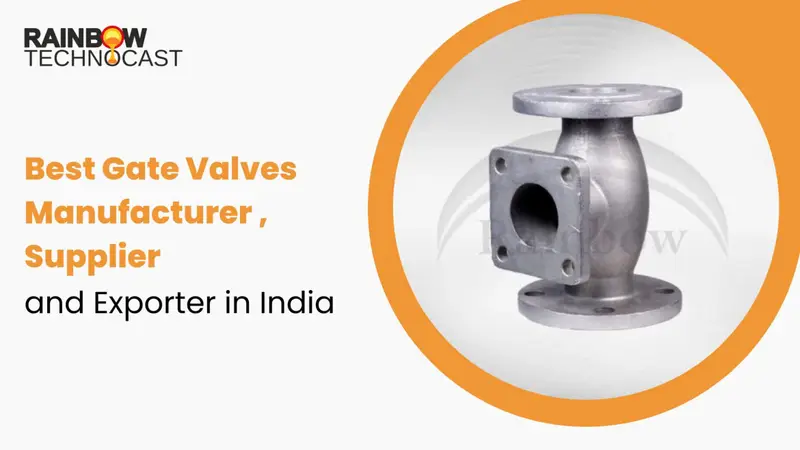
A gate valve failed in a major petrochemical plant. The buyer blamed the manufacturer, but the real culprit was a faulty casting deep inside the valve body—a stem defect that radiographic testing would have caught. This single failure cost the plant $2.3 million in downtime, proving that choosing a gate valve isn’t just about the brand stamp on the body. It’s about what’s hidden inside.
According to power plant statistics, 37% of external valve leakage incidents stem from casting defects. Yet most procurement teams focus on price and delivery schedules, missing the engineering reality that separates reliable valves from expensive disasters.
Gate Valves: The Engineering Reality Behind the Purchase Decision
Gate valves control flow in the most demanding applications—from high-pressure steam systems to corrosive chemical processes. They’re the workhorses of oil and gas facilities, water treatment plants, pharmaceutical manufacturing, and power generation. But here’s what procurement teams often miss: the precision casting components that form the valve’s foundation determine whether your system runs for decades or fails within months.
Investment castings create the complex geometries required for valve bodies, bonnets, and internal mechanisms. These aren’t simple metal parts—they’re engineered components that must withstand thermal cycling, pressure fluctuations, and corrosive environments while maintaining dimensional accuracy measured in thousandths of an inch.
How to Evaluate Gate Valve Manufacturers: Beyond Price and Lead Times
Smart procurement goes deeper than competitive bidding. Here’s what separates reliable suppliers from potential liability:
- Sourcing Standards Matter: Look for manufacturers with ISO 9001:2015 certification and API 6D monograms. These aren’t just certificates—they represent documented quality systems that trace every casting from raw material to final testing.
- In-House vs. Outsourced Casting: Manufacturers who control their casting supply chain can guarantee material traceability. Those who outsource often lose visibility into the most critical failure points.
- Materials Traceability: Demand heat number tracking for all pressure-containing components. WCB (carbon steel) and CF8M (316 stainless steel) castings should come with EN 10204 Type 3.1 certificates showing chemical composition and mechanical properties.
- Heat Treatment and Testing Protocols: Reputable manufacturers employ X-ray radiography, ultrasonic testing (UT), and magnetic particle inspection (MPI) to detect internal defects before assembly.
Investment Castings Behind Every Reliable Valve
Rainbow Technocast represents the world-class casting suppliers that global valve manufacturers depend on. Operating from a 36,000-square-foot facility in Gujarat, they produce valve bodies, bonnet castings, yoke arms, and handwheel hubs with capabilities spanning 50 grams to 140 kilograms in single pieces.
Their material versatility covers everything from standard grades to duplex stainless steel, super duplex alloys, and high-nickel corrosion-resistant materials. Most importantly, they maintain zero-defect standards through comprehensive NDT testing protocols, including X-ray examination, ultrasonic testing, and magnetic particle inspection.
Case Study: A European valve OEM reduced rejection rates by 42% after switching to Rainbow Technocast for valve body castings. The improvement came from Rainbow’s in-house heat treatment capabilities and batch-level material traceability—capabilities that many lower-cost suppliers simply cannot match.
Red Flags: When Valve Manufacturers Aren’t Transparent
No Heat Number Traceability: If a manufacturer can’t provide heat numbers linking castings back to their foundry source, you’re buying blind. “Without heat numbers, there’s no way of knowing whether valves are manufactured of the correct material and able to sustain required pressure,” warns industry expert Allen Maguire.
Imported Low-Grade Castings: Many manufacturers source castings from suppliers with no material certifications. Visible leakage or seepage through pressure-containing walls is automatic cause for rejection.
Generic Quality Claims: Manufacturers who speak in generalities about “quality” without specific testing protocols, material certifications, or documented processes should raise immediate concerns.
Top Gate Valve Manufacturers in India: A Curated Assessment
Based on certifications, export performance, and OEM partnerships, these manufacturers represent India’s most credible gate valve suppliers:
L&T Valves Limited – Six decades of experience with API 6D certification and SIL-3 rated products
Kirloskar Brothers Limited – Established player with comprehensive testing facilities
Hawa Valves India – Four manufacturing facilities with in-house NDT capabilities
Novel Valves India – API 6D monogram holder with IBR approval
GM Engineering – Specializes in Class 150 to Class 2500 gate valves with fire-safe certifications
Several of these manufacturers source precision castings from specialized foundries like Rainbow Technocast, ensuring the component quality that global OEMs demand.
How OEMs Choose Component Suppliers: The Real Evaluation Criteria
Leading valve manufacturers evaluate casting suppliers on CMM inspection data, tolerance-holding capabilities, and batch traceability systems. Emerson, for example, requires foundries to demonstrate ASME qualification, third-party certifications, and documented welding procedures.
Rainbow Technocast’s global partnerships span Europe, the United States, and Asia, serving clients who demand not just precision parts but engineering partnerships that support long-term reliability.
Specifying the Right Valve And the Right Partner
- Service Conditions: Define temperature, pressure, and fluid compatibility requirements precisely.
- Size and Pressure Class: Ensure compatibility with existing piping systems.
- Material Specifications: Specify ASTM grades and required certifications.
- The Critical Question: Ask every valve supplier, “Who manufactured your castings, and can you provide material traceability documentation?”
Why India Is Becoming the Global Center for Precision Valve Components
The China+1 strategy is reshaping global supply chains. Labor costs in India are 33% lower than in China, while government initiatives like Make in India and PLI schemes are attracting $520 billion in manufacturing investment.
Indian foundries are investing heavily in automation and metallurgy, with companies like Rainbow Technocast obtaining German TUV certifications and API 20-A approvals. This combination of cost competitiveness and quality capability is positioning India as the preferred alternative to traditional manufacturing centers.
What to Ask Before Approving Any Valve Purchase Order
Material Traceability: “Can you provide heat numbers and material certificates for all pressure-containing components?”
Testing Documentation: “What NDT testing is performed, and can you provide radiographic reports?”
Casting Source: “Are castings produced in-house or outsourced, and what quality controls govern the casting process?”
Supplier Qualification: “What certifications do your component suppliers maintain?”
Looking for a casting partner that global valve brands trust? Rainbow Technocast delivers the pressure-tight, precision-engineered components that make the difference between reliable operation and expensive failure. Their combination of advanced manufacturing capabilities, comprehensive testing protocols, and material traceability systems represents the engineering excellence that high-consequence applications demand.