
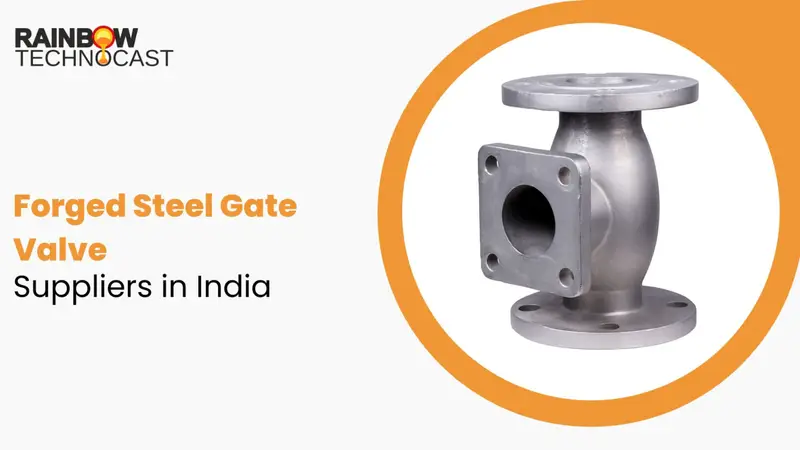
Sourcing forged steel gate valves in India presents a specific procurement challenge: many suppliers distribute cast valves marketed as forged products, and buyers discover the difference only after premature failures in high-pressure service. The mechanical properties differ substantially—forged steel exhibits superior grain structure and higher tensile strength compared to cast equivalents, yet price pressure drives substitution. This creates reliability issues in critical applications like steam systems, high-pressure gas lines, and refinery units where valve failure carries serious safety and production consequences. The solution requires verifying manufacturing processes and material certifications before committing to suppliers who may lack actual forging capabilities.
This guide examines the technical advantages of forged construction, specification criteria that determine proper application fit, and supplier evaluation methods that separate authentic manufacturers from trading intermediaries. The objective is straightforward: secure valves that deliver promised performance under rated conditions without premature replacement costs.
What Are Forged Steel Gate Valves?
Forged steel valves begin as solid steel billets heated and shaped under extreme pressure using hydraulic presses or hammers. This mechanical working refines grain structure and eliminates porosity that weakens cast components. The process creates denser molecular alignment along stress lines, improving impact resistance and fatigue life.
Gate valves control flow by raising or lowering a wedge-shaped disc perpendicular to the fluid path. When fully open, the gate retracts completely from the flow stream, creating minimal pressure drop. This makes gate valves ideal for on-off service rather than throttling applications.
Forged construction becomes mandatory in compact valve designs (½” to 2″ typically) where wall thickness limitations prevent adequate strength through casting. API 602 specifically covers forged steel gate, globe, and check valves in these smaller sizes for petroleum and natural gas applications.
Types and Specifications
Pressure classes range from 800# to 2500# following ASME B16.34 standards. Each class defines pressure-temperature limits that decrease as operating temperature rises. For example, a Class 1500 valve rated for 2220 PSI at -29°C to 38°C drops to 1780 PSI at 260°C.
End Connection Options
Socket weld ends suit permanent installations in high-pressure piping systems. The socket depth provides positive alignment during welding and adds mechanical strength. Threaded connections enable quick installation but limit pressure capability due to thread engagement depth. Butt weld ends create flush connections in critical service where crevices must be minimized.
Flanged connections accommodate frequent disassembly for maintenance. Raised face, ring-type joint, and flat face configurations match different piping standards.
Material Grade Selection
Carbon steel forgings (ASTM A105) handle general industrial service up to 425°C. Stainless steel grades (F304, F316, F321) resist corrosion in chemical processing and offshore applications. Alloy steel materials (F11, F22, F91) serve high-temperature steam systems in power plants where creep resistance matters.
Key Features of Forged Steel Gate Valves
Superior mechanical properties distinguish forged valves from cast alternatives. Tensile strength typically exceeds cast equivalents by 15-20%, while impact toughness remains higher across temperature ranges. This performance gap widens in cryogenic service where cast materials become brittle.
Tight shutoff capability stems from precision-machined seating surfaces and flexible disc designs. Wedge gates conform to seat geometry under system pressure, creating bubble-tight seals even after thermal cycling.
Renewable seats extend service life beyond typical cast valve capabilities. Threaded seat rings unscrew for replacement when wear occurs, avoiding complete valve replacement. Backseat designs prevent stem leakage when valves operate fully open.
Compact Design Advantages
Forged valves occupy less space than cast equivalents in the same pressure class. Reduced end-to-end dimensions matter in retrofits and skid-mounted systems where every inch counts. Lower weight simplifies handling during installation and maintenance.
Industries Using Forged Steel Gate Valves
Oil and gas operations specify forged valves for wellhead systems, manifolds, and high-pressure gathering lines. Subsea installations demand corrosion-resistant materials that withstand saltwater exposure. Refinery process units use forged valves in hydrocarbon service where fire-safe certification is mandatory.
Power generation facilities install forged valves in boiler feedwater systems, steam headers, and turbine bypass lines. High-temperature alloy materials prevent creep deformation during continuous operation.
Chemical processing plants require forged valves for corrosive media handling. Stainless steel construction resists acids, caustics, and chlorinated compounds. Water treatment infrastructure uses forged valves in high-pressure pumping stations and reverse osmosis systems.
Supplier Selection Criteria in India
Manufacturing capability verification separates actual producers from trading companies. Authentic manufacturers operate forging presses, heat treatment facilities, and machining centers under one roof. Request facility tours to observe production processes directly.
Certification validates both quality management systems and product designs. ISO 9001 covers manufacturing processes, while API 602 certification proves valve designs meet petroleum industry standards. IBR approval remains mandatory for valves in Indian boiler applications.
Technical Support and Customization
Engineering assistance during specification development prevents selection errors. Suppliers with technical teams help match pressure classes to operating conditions, recommend materials for specific media, and provide application-specific documentation.
Customization capability accommodates non-standard requirements. Projects often need special trim materials, extended stems for insulation, or unique actuation interfaces that catalog products can’t satisfy.
Quality Assurance and Testing
Hydrostatic testing verifies structural integrity before shipment. Shell tests at 1.5 times rated pressure confirm body strength, while seat tests at 1.1 times rated pressure validate shutoff capability. Test certificates provide traceability for critical applications.
Material certification documents chemical composition and mechanical properties. Mill test certificates from steel mills trace raw material chemistry to ensure specified alloy content. Independent laboratory testing validates heat treatment results.
Advanced Testing Methods
Radiographic examination detects internal defects in forged bodies. Liquid penetrant testing reveals surface cracks invisible to visual inspection. Positive material identification confirms alloy grades before machining begins.
Dimensional inspection catches manufacturing deviations. Face-to-face measurements, pressure seal dimensions, and stem thread verification ensure proper fit with actuators and piping.
Advantages of Partnering with Indian Suppliers
India’s forging industry combines technical expertise with cost-competitive manufacturing. Labor cost differentials create 20-30% price advantages compared to European and North American sources without sacrificing quality.
Local manufacturing reduces lead times significantly. Domestic suppliers ship standard configurations within 3-4 weeks versus 12-16 weeks for imports. Custom orders complete faster when engineering and production teams coordinate directly.
Export compliance infrastructure enables international shipments. Established suppliers maintain documentation systems meeting European PED, North American ASME, and Middle Eastern client requirements.
After-Sales Service Accessibility
Regional service networks support installation and commissioning. Technical representatives provide on-site assistance for critical startups. Spare parts availability shortens repair turnaround when components need replacement.
Frequently Asked Questions
Q: How do I verify a supplier actually manufactures forged valves rather than reselling cast products?
A: Request facility documentation including forging press specifications, heat treatment furnace capacities, and quality certifications. Visit production facilities to observe actual forging operations and inspect work-in-progress inventory. Examine finished valve grain structure through metallurgical analysis if authenticity remains uncertain.
Q: What pressure class should I specify for a system operating at 1200 PSI and 320°C?
A: Reference pressure-temperature charts for your selected material grade. Carbon steel Class 1500 valves typically rate for 1480 PSI at 320°C, providing adequate safety margin. Higher operating temperatures require higher pressure classes to maintain the same working pressure.
Q: Can forged steel gate valves be modified for special process requirements?
A: Most manufacturers accommodate customization including extended stems, special trim materials, cryogenic service configurations, and unique end connections. Provide complete operating parameters and installation constraints during specification discussions. Custom modifications typically add 2-3 weeks to standard lead times.
Q: How are forged valves tested to ensure safety in critical applications?
A: Standard testing includes hydrostatic shell and seat tests at pressures exceeding operating ratings. Critical service adds radiographic examination, liquid penetrant testing, and positive material identification. Fire-safe testing per API 607 validates performance during and after fire exposure for hydrocarbon applications.
Q: What documentation should suppliers provide with forged steel gate valves?
A: Expect material test reports tracing chemical composition and mechanical properties, hydrostatic test certificates with actual test pressures recorded, dimensional inspection reports confirming specifications, and compliance certificates for applicable standards like API 602 or ASME B16.34. Regulated industries require full traceability documentation.
Conclusion
Select suppliers who manufacture forged valves in-house, maintain comprehensive certifications, and provide engineering support throughout procurement. This approach ensures authentic forged construction that delivers promised performance under rated conditions.
Rainbow Technocast specializes in precision-forged valve components manufactured through controlled forging processes and advanced heat treatment protocols. Our metallurgical expertise and quality control systems produce forged steel gate valves meeting international standards for demanding industrial applications.
Planning a high-pressure valve procurement? Submit your technical specifications to our engineering team for detailed proposals including material certifications, pressure-temperature ratings, and delivery schedules aligned with your project requirements.