
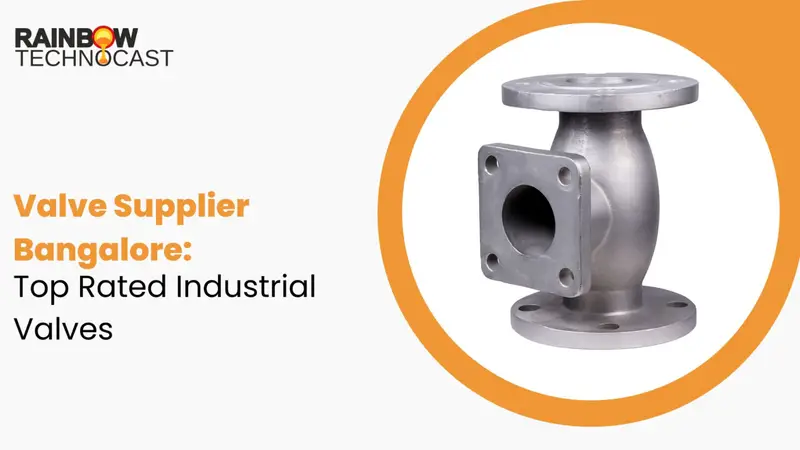
Bangalore’s industrial procurement teams face a recurring bottleneck: valve suppliers who promise quick delivery but lack adequate inventory, forcing emergency purchases at inflated prices when critical components fail. Research shows 68% of unplanned downtime in fluid handling systems traces back to valve failures that could have been prevented through better supplier selection and preventive replacement strategies. The challenge intensifies when suppliers can’t provide technical guidance during specification, leaving buyers to match pressure ratings, materials, and end connections through trial and error. This creates expensive mistakes—valves that leak prematurely, fail pressure tests, or can’t handle actual operating conditions. The solution requires partnering with suppliers who maintain local inventory, provide engineering support, and control quality through integrated manufacturing.
This guide examines valve configurations common across Bangalore industries, supplier evaluation criteria that separate stockists from capable partners, and service capabilities that minimize total cost of ownership.
Types of Valves Supplied
Ball valves deliver quarter-turn shutoff with minimal torque requirements. Floating ball designs suit low to medium pressure applications, while trunnion-mounted configurations handle high-pressure gas service where seat loading exceeds standard bearing capacity. Full-bore and reduced-bore options accommodate different flow velocity requirements.
Gate valves provide unrestricted flow paths when fully open, making them standard in applications where pressure drop matters more than throttling capability. Wedge gate designs create bidirectional sealing, while knife gate configurations cut through viscous media and slurries.
Globe valves enable precise flow modulation through perpendicular seat arrangement. The tortuous flow path creates higher pressure drop than gate or ball valves but delivers superior control for temperature regulation and pressure reduction.
Specialized Configurations
Butterfly valves occupy minimal space and offer cost advantages in large-diameter applications. High-performance triple-offset designs eliminate sliding friction between disc and seat, extending service life in critical applications.
Check valves prevent backflow automatically when upstream pressure drops below downstream. Swing check, dual-plate, and silent check variants suit different installation orientations and flow velocities.
Industry Applications Served
Bangalore’s pharmaceutical sector demands sanitary valves meeting ASME BPE standards and FDA validation requirements. Electropolished surfaces, metal-seated designs, and full traceability documentation support compliance audits.
Chemical manufacturing facilities require corrosion-resistant materials and fugitive emission certifications. Hastelloy, titanium, and PTFE-lined valve bodies handle aggressive acids and solvents that destroy standard materials.
Power generation plants consume high-temperature valves for steam systems operating above 540°C. Alloy steel bodies with graphite packing assemblies resist thermal fatigue during load cycling.
Food processing installations specify 3-A sanitary valves with smooth internal finishes that prevent bacterial colonization. Quick-opening clamp connections enable frequent cleaning cycles without tools.
Water treatment infrastructure relies on large-diameter butterfly and gate valves with extended service life. Epoxy-coated ductile iron bodies resist corrosion in potable water and wastewater applications.
Supplier Selection Criteria
Certification validates manufacturing capability and quality systems. ISO 9001 confirms quality management processes, while API certifications (API 6D, API 600, API 602) prove design compliance for petroleum service. PED marking enables European exports.
Inventory depth separates capable suppliers from order-takers who depend on external sources. Suppliers maintaining 45-60 days of stock for common configurations ship within 2-3 business days. Custom specifications requiring manufacturing take 4-8 weeks depending on complexity.
Technical Support Capabilities
Engineering assistance during specification prevents costly selection errors. Suppliers with in-house technical teams help calculate Cv coefficients, verify pressure-temperature ratings against operating conditions, and recommend materials for specific media.
Application experience across industries enables pattern recognition that catches potential issues early. Suppliers who’ve worked through similar installations understand common failure modes and specification pitfalls.
Quality Assurance and Testing
Hydrostatic testing validates structural integrity under pressure. Shell tests at 1.5x design pressure confirm body strength, while seat tests at 1.1x pressure verify shutoff capability. Digital test certificates with traceable serial numbers provide accountability.
Material certification traces chemical composition and mechanical properties back to steel mill heat numbers. PMI (Positive Material Identification) testing confirms actual alloy matches specifications before machining begins.
Dimensional inspection catches manufacturing deviations that cause installation problems. Face-to-face measurements, flange drilling patterns, and stem dimensions require verification against applicable standards.
Value-Added Services
Valve automation converts manual valves into remotely controlled assets. Electric actuators integrate with DCS systems for feedback control, while pneumatic actuators provide fail-safe positioning during power loss.
Maintenance programs extend service life through scheduled inspections and preventive component replacement. Stem packing adjustment, seat refurbishment, and seal replacement prevent minor issues from becoming failures.
Spare parts stocking minimizes downtime when repairs become necessary. Pre-positioned inventory of seals, stems, and actuator components cuts turnaround from weeks to days.
Local Supplier Advantages
Geographic proximity enables same-day emergency response when critical valves fail unexpectedly. Local suppliers dispatch stock items within hours rather than days required for distant sources.
Face-to-face meetings clarify technical requirements more effectively than email exchanges. Walking through installations and observing actual operating conditions reveals details that specifications miss.
Reduced logistics costs improve project economics measurably. Eliminating interstate freight charges and customs delays saves 8-12% on delivered costs. Installation support becomes practical when suppliers operate nearby.
Frequently Asked Questions
Q: How do I determine the right valve type for my specific application?
A: Start by defining flow control requirements—on/off service favors ball or gate valves, while throttling demands globe valves. Match pressure and temperature ratings to system conditions with adequate safety margin. Consider media properties including corrosiveness, viscosity, and particulate content when selecting materials.
Q: What lead times should I expect for standard versus custom valve orders in Bangalore?
A: Stock items ship within 2-5 business days from suppliers maintaining local inventory. Standard catalog valves in non-stock sizes require 3-4 weeks. Custom specifications with special materials or non-standard dimensions need 6-8 weeks for engineering approval, manufacturing, and testing.
Q: Can suppliers provide installation support and commissioning assistance?
A: Capable suppliers offer field service for critical installations. Services include installation supervision, hydrostatic pressure testing, actuator setup and calibration, and operator training on proper valve operation. Confirm availability and cost structure during initial discussions.
Q: What documentation should suppliers provide with industrial valves?
A: Expect material test reports documenting chemical composition and mechanical properties, hydrostatic test certificates with actual pressures recorded, dimensional inspection reports confirming specifications, and compliance certificates for applicable standards. Critical applications require full traceability from raw material to finished product.
Q: How can I verify supplier claims about manufacturing capabilities?
A: Request facility tours to observe production processes directly. Review quality certifications from independent bodies rather than self-declarations. Ask for customer references in similar industries and follow up on actual performance.
Conclusion
Select suppliers who maintain local inventory, provide engineering support, and control quality through proven systems. This approach reduces procurement friction while ensuring valves perform as specified.
Rainbow Technocast manufactures precision-cast valve components at integrated facilities serving industrial clients across Karnataka. Our technical team supports specification development, material selection, and field installation for projects requiring reliable flow control solutions in demanding applications.
Sourcing valves for your Bangalore facility? Contact our regional engineering team with your specifications to receive detailed proposals, pressure-temperature documentation, and delivery schedules aligned with your project requirements.