
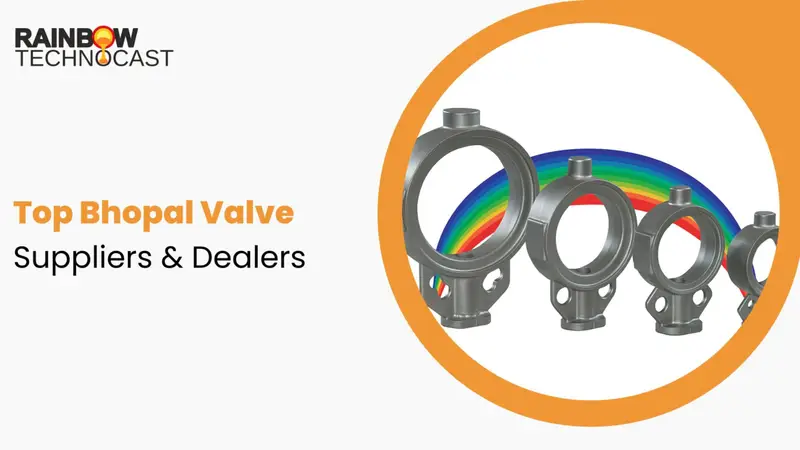
Finding a dependable valve supplier in Bhopal involves navigating a fragmented market where dealers stock limited inventory and manufacturers operate without local distribution networks. Most procurement teams face a recurring problem: urgent valve replacements get delayed because suppliers can’t commit to delivery timelines, and custom specifications require multiple vendor conversations. This creates costly downtime when critical valves fail in production environments or when new installations demand specific pressure ratings and material grades. The solution lies in working with suppliers who control both manufacturing and regional logistics—eliminating coordination friction while maintaining inventory depth.
This guide details valve types, material selection, and quality assurance for Bhopal’s industrial sector. The aim is to shorten procurement while finding precise application-specific valves.
Types of Valves Available
Ball valves dominate applications requiring quick shutoff and minimal pressure drop across the valve. The quarter-turn operation and full-bore design make them ideal for on-off service in pipelines handling liquids and gases. Floating ball and trunnion-mounted configurations serve different pressure ranges.
Gate valves provide unrestricted flow paths when fully open, making them standard in pipeline systems where flow resistance must stay minimal. Rising stem designs indicate valve position visually, while non-rising stem types save vertical space.
Globe valves excel in throttling applications where precise flow modulation matters more than low pressure drop. The perpendicular seat design enables accurate control but creates higher resistance compared to ball or gate valves.
Specialized Valve Configurations
Butterfly valves fit tight spaces and offer cost advantages in large-diameter applications. Wafer and lug body styles accommodate different installation requirements. Check valves prevent backflow automatically without external power or control signals. Swing check, lift check, and dual-plate designs suit different velocity and pressure conditions.
Key Components and Materials
Valve body material selection depends on process media and operating conditions. Carbon steel (ASTM A216 WCB) handles general industrial service up to 425°C. Stainless steel grades (304, 316, 317L) resist corrosion in chemical processing and pharmaceutical applications.
Bronze and brass valves serve water distribution systems and plumbing installations where dezincification resistance is critical. Alloy steel bodies (ASTM A217 WC6, WC9) handle high-temperature steam service in power plants.
Trim materials—seats, stems, and internal components—require compatibility with process fluids. Hardened stainless steel trims resist erosion in abrasive service. PTFE and other soft seals provide bubble-tight shutoff but limit temperature capability.
Pressure Ratings and Size Ranges
Standard pressure classes range from 150# to 2500# following ASME B16.34 specifications. Each class has defined pressure-temperature limits that decrease as temperature rises. Valve sizes span from ½” to 48″ nominal diameter to match piping system requirements.
Industries Served in Bhopal
Power generation facilities in Madhya Pradesh require high-temperature valves for boiler feedwater, steam control, and cooling systems. Coal handling plants need erosion-resistant designs for slurry service.
Chemical processing units demand corrosion-resistant materials and fugitive emission compliance. Specialty valve configurations handle acids, caustics, and solvents safely.
Water treatment infrastructure across Bhopal relies on large-diameter butterfly and gate valves for intake, distribution, and sewage systems. Ductile iron and epoxy-coated valves provide long service life in municipal applications.
Food processing facilities require 3-A sanitary valves with smooth internal finishes that prevent bacterial growth. Pharmaceutical manufacturing specifies valves meeting FDA compliance and validation protocols.
Steel plants and heavy engineering units consume high-pressure valves for hydraulic systems and pneumatic controls. Cryogenic service demands extended bonnet designs and specialized materials.
Supplier Selection Criteria
Certification proves manufacturing capability and quality management systems. ISO 9001 covers quality processes, while API certifications (API 6D, API 600, API 602) validate design standards for specific valve types. IBR approval is mandatory for valves in boiler applications across India.
Product range depth determines whether a supplier can fulfill diverse specifications from a single source. Comprehensive catalogs covering multiple valve types, materials, and pressure classes reduce procurement complexity.
Technical Support Capabilities
Engineering assistance during specification development prevents costly selection errors. Suppliers with in-house technical teams help size valves correctly, recommend appropriate materials for specific media, and provide application-specific documentation.
Inventory availability and delivery commitments separate capable suppliers from distributors who depend on external sources. Stock depth for common configurations enables quick shipment, while manufacturing capability supports custom orders.
Quality Assurance Practices
Hydrostatic testing verifies valve body integrity under pressure. Shell tests confirm structural strength at 1.5 times rated pressure, while seat tests validate shutoff capability. Test reports provide traceability for regulated industries.
Material certification documents alloy composition and mechanical properties. Mill test certificates from steel producers trace raw material chemistry to ensure specified corrosion resistance.
Dimensional inspection catches manufacturing deviations before shipment. Face-to-face measurements, flange bolt circle verification, and bore diameter checks ensure proper fit with existing piping.
Non-Destructive Testing
Critical applications require additional testing beyond standard protocols. Radiographic examination detects internal casting defects. Liquid penetrant testing reveals surface cracks invisible to visual inspection.
Value-Added Services
Valve automation converts manual valves into remotely operated systems. Electric, pneumatic, and hydraulic actuators enable integration with distributed control systems. Positioners and limit switches provide position feedback for closed-loop control.
Maintenance support extends valve service life and reduces unplanned downtime. Preventive maintenance programs include packing adjustment, seat refurbishment, and seal replacement.
Spare parts availability ensures quick repair turnaround when components wear or fail. Stocking critical parts like seals, stems, and actuator components minimizes production interruptions.
Advantages of Local Sourcing
Proximity enables faster response when urgent requirements emerge. Local suppliers dispatch stock items same-day or next-day in emergency situations. Face-to-face meetings clarify technical requirements more effectively than remote communication.
Reduced logistics costs improve project economics significantly. Freight charges drop when sourcing within Madhya Pradesh versus shipping from distant manufacturing hubs. Transit time reductions compress project schedules.
Site support becomes practical when suppliers operate nearby. Installation supervision, commissioning assistance, and troubleshooting require less coordination than flying in technicians from other regions.
Frequently Asked Questions
Q: What certifications should I verify before placing bulk valve orders?
A: Confirm ISO 9001 for quality systems and API certifications matching your valve types. Request IBR approval documentation for boiler applications and verify registration numbers with issuing authorities. Ask for copies of actual certificates rather than claims.
Q: How do I ensure valves will handle my specific operating conditions?
A: Provide complete process data including minimum and maximum pressure, temperature range, media characteristics, and flow rates. Request pressure-temperature rating charts for proposed materials and compare against your operating envelope with adequate safety margin.
Q: What lead times are typical for standard versus custom valve orders in Bhopal?
A: Stock items ship within 2-5 business days depending on supplier inventory. Standard catalog valves with non-stock configurations require 2-3 weeks. Custom designs with special materials or non-standard dimensions need 6-8 weeks for engineering, manufacturing, and testing.
Q: Do suppliers provide installation support and startup assistance?
A: Capable manufacturers offer field service for critical installations. Services include installation supervision, hydrostatic testing, actuator commissioning, and operator training. Confirm availability and costs upfront.
Q: How can I evaluate valve quality before committing to large purchases?
A: Request sample valves for inspection and testing in your application. Review actual test reports from previous production lots. Visit manufacturing facilities to assess quality control processes and equipment capability.
Conclusion
Choose suppliers who manufacture locally, maintain comprehensive inventory, and provide engineering support throughout procurement. This approach eliminates delays while ensuring valves match application requirements precisely.
Rainbow Technocast manufactures precision-cast valve components at integrated facilities serving industrial clients across central India. Our technical team supports specification development, material selection, and installation guidance for projects requiring reliable flow control solutions.
Planning a valve procurement for your Bhopal facility? Contact our regional sales office with your specifications to receive detailed technical proposals, pressure-temperature documentation, and delivery schedules aligned with your project timeline.