
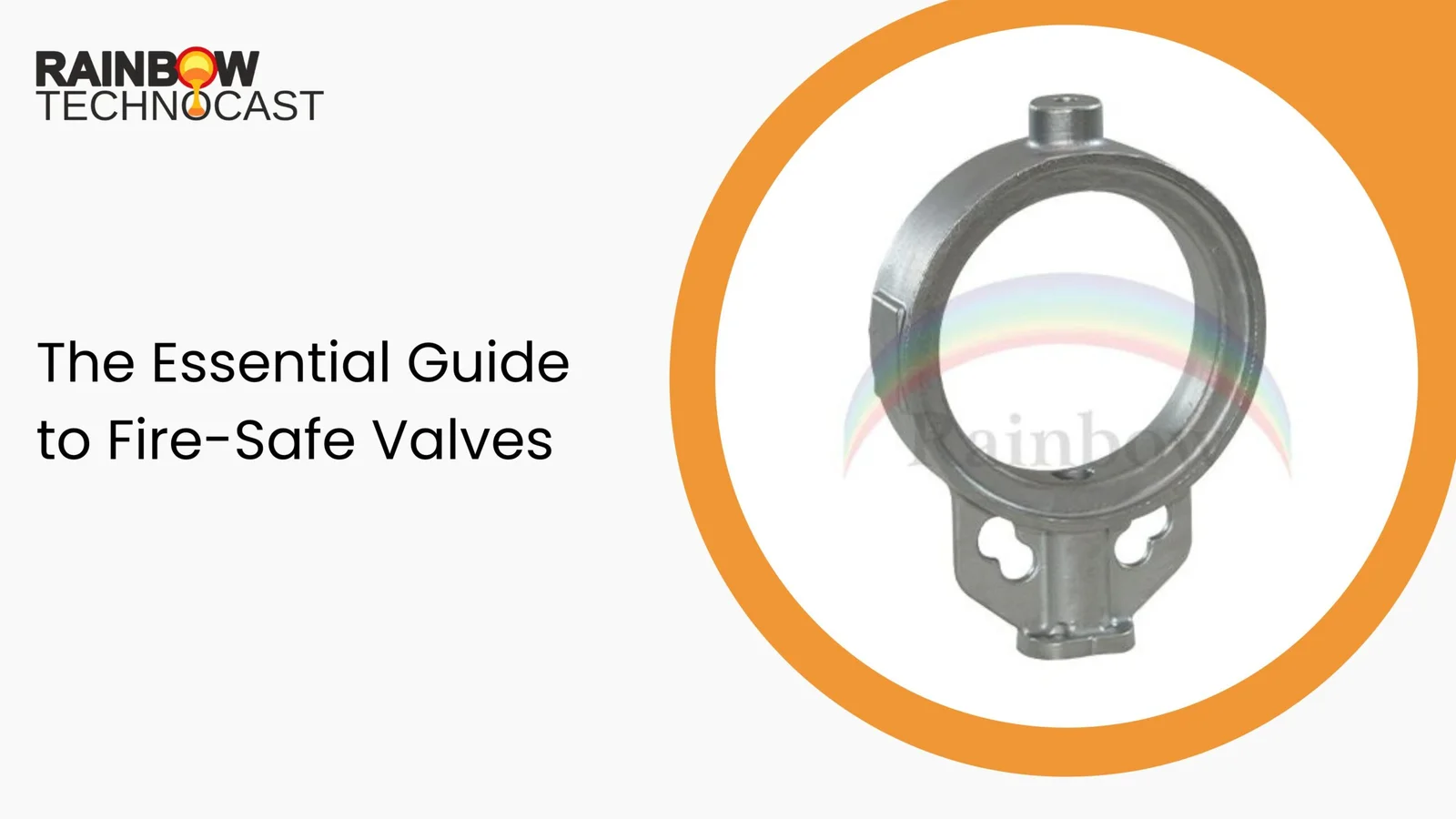
In the realm of industrial processes, where flammable liquids and gases flow through extensive piping networks, fire-safe valves serve as indispensable guardians of safety. Designed to withstand extreme heat and prevent catastrophic leaks during fire incidents, these valves are the frontline defense against fire escalation. Rainbow Technocast, a leader in valve manufacturing, provides cutting-edge fire-safe valve solutions engineered to meet the strictest safety standards and operational demands.
What Are Fire-Safe Valves? Understanding Their Purpose
Fire-safe valves are specialized industrial valves built to maintain their sealing capability during and after exposure to fire. Unlike standard valves that may fail under high temperatures, fire-safe valves employ unique designs and materials to ensure containment of hazardous fluids even in fire conditions. Their core objective is to isolate combustible fluids from ignition sources, thus minimizing the risk of explosion, uncontrolled spills, and extensive damage.
These valves are mandatory in industries such as oil and gas, petrochemicals, power generation, and chemical manufacturing—where fire hazards are inherent and stringent safety codes enforce their usage.
Key Components and Design Features of Fire-Safe Valves
Fire-safe valves combine innovative engineering with robust materials to deliver reliability under fire scenarios.
- Dual-Seal System: The hallmark of fire-safe valves is their dual-sealing arrangement. Under normal conditions, a soft primary seal (often PTFE or rubber) ensures a leak-proof closure. When exposed to fire, this soft seal may degrade, but a secondary metal-to-metal seal activates, maintaining tight sealing against flammable media.
- Heat-Resistant Materials: Valve bodies and critical components are crafted from high-grade stainless steel or alloy steels capable of withstanding thermal distortion and mechanical stresses during fire. Seals also incorporate fire-resistant materials such as graphite to maintain integrity.
- Spring-Loaded Mechanisms: Many fire-safe valves integrate spring stacks and fusible links that respond automatically to high temperature by closing the valve, ensuring immediate shutdown of flow.
- Anti-Static Devices: To prevent static electricity build-up that could spark ignition, fire-safe valves often include grounding and bonding features that dissipate static charges.
- Robust Construction: The valves are precision-engineered to endure extreme heat without warping, leakage, or structural failure, prioritizing safe fluid isolation.
How Fire-Safe Valves Work: The Mechanism Explained
At their core, fire-safe valves operate like typical quarter-turn valves (ball, butterfly, or plug types), controlling flow by rotating a disc or ball 90 degrees to open or close the passage. What distinguishes them is their response to fire:
- Under Normal Operation: The valve uses a soft, flexible seal to achieve bubble-tight shutoff with minimal friction and wear.
- During Fire Exposure: When ambient temperatures soar, the soft seal materials are broken down or melted, which could create leak paths.
- Activation of Metal-to-Metal Seal: The valve’s design ensures that as the primary seal fails, the secondary metal seating surfaces make contact, providing a fire-resistant barrier that stops fluid escape.
- Automatic Closure with Fusible Link: In some designs, fusible links holding back a spring release at a predefined temperature, forcing the valve to close immediately to isolate the hazard.
- Static Dissipation: The anti-static feature prevents any dangerous sparks in volatile environments.
This multi-tiered design guarantees no leakage even in catastrophic situations, greatly reducing fire risk.
Fire-Safe Valve Standards and Certifications
Compliance with international standards is vital to fire-safe valve performance:
- API 607 / API 6FA: These are among the most widely recognized standards specifying fire test procedures and performance criteria for valves used in fire-prone industrial areas.
- ISO 10497: This global standard details fire-testing requirements for valves to ensure they maintain pressure integrity during and after fire exposure.
Rainbow Technocast’s fire-safe valves are rigorously tested to meet or exceed these standards, ensuring trusted performance under the most challenging conditions.
Advantages of Using Fire-Safe Valves
- Enhanced Safety: By preventing leaks during fire events, these valves protect personnel, plant assets, and the environment.
- Regulatory Compliance: Meeting safety codes and regulations helps avoid legal penalties and insurance issues.
- Operational Continuity: By containing hazards swiftly, fire-safe valves help limit plant downtime and damage aftermath.
- Versatile Applications: Suitable for oil, gas, chemical, power, and other industries with fire hazard exposure.
- Reduced Risk of Explosion and Spills: Preventing flammable fluid leaks mitigates fire spread and catastrophic accidents.
Applications of Fire-Safe Valves Across Industries
Fire-safe valves find critical use wherever process fluids are flammable or combustible:
- Oil & Gas: In refinery units, pipelines, and offshore platforms where hydrocarbon leaks can spark disasters.
- Chemical Manufacturing: Handling reactive and volatile chemicals that demand zero-tolerance leakage.
- Power Plants: Protecting high-pressure steam and fuel systems.
- Petrochemical Storage: Ensuring tank and pipeline integrity under fire threats.
- Pharmaceutical: Secure handling of solvent vapors and combustible liquids.
Rainbow Technocast supplies fire-safe valves tailored for specific industry needs, ensuring reliable safeguarding of critical operations.
Innovations Driving Fire-Safe Valve Technology Forward
The industry continuously leaps forward on fire safety fronts:
- Advanced Seal Materials: New composites like graphite-filled PTFE blends enhance fire resistance and durability.
- Smart Fire-Safe Valves: Integrating IoT sensors for real-time temperature and leak monitoring, enabling swift automated response.
- Lightweight Alloys: Use of high-strength, corrosion-resistant alloys reducing weight without compromising safety.
- Improved Actuation: Electrically or pneumatically actuated fire-safe valves with precise control and rapid closure mechanisms.
Rainbow Technocast pioneers such advancements, offering future-ready valve solutions aligned with evolving safety and environmental regulations.
How to Select the Right Fire-Safe Valve for Your Operations
Choosing the appropriate fire-safe valve involves assessing key factors:
- Process Fluid Compatibility: Ensure materials handle chemical properties and temperatures.
- Pressure and Temperature Ratings: Verify valve meets peak operating and fire exposure requirements.
- Valve Type Suitability: Ball, butterfly, or plug valves each suit different pipe configurations and operational preferences.
- Certification Compliance: Confirm adherence to API, ISO, or equivalent standards.
- Maintenance and Accessibility: Consider ease of servicing and testing protocols.
Maintenance and Inspection: Sustaining Fire Safety Performance
Regular inspection and maintenance are crucial, including:
- Visual checks for corrosion or damage.
- Functional testing of operation and sealing.
- Verifying actuator and fusible link conditions.
- Monitoring anti-static devices and grounding continuity.
Rainbow Technocast offers comprehensive support, ensuring valves perform flawlessly throughout their lifecycle.
Conclusion: Fire-Safe Valves – Your Indispensable Shield with Rainbow Technocast
Fire-safe valves are not just hardware; they are vital life- and asset-protecting technologies. With robust construction, innovative dual-sealing designs, and certified performance, they mitigate the severe risks posed by industrial fires. Rainbow Technocast’s expertise in manufacturing and testing fire-safe valves provides peace of mind to industries handling flammable materials. Choose Rainbow Technocast for fire-safe valve solutions that combine safety, reliability, and cutting-edge technology—because when it comes to fire, safety is everything.