
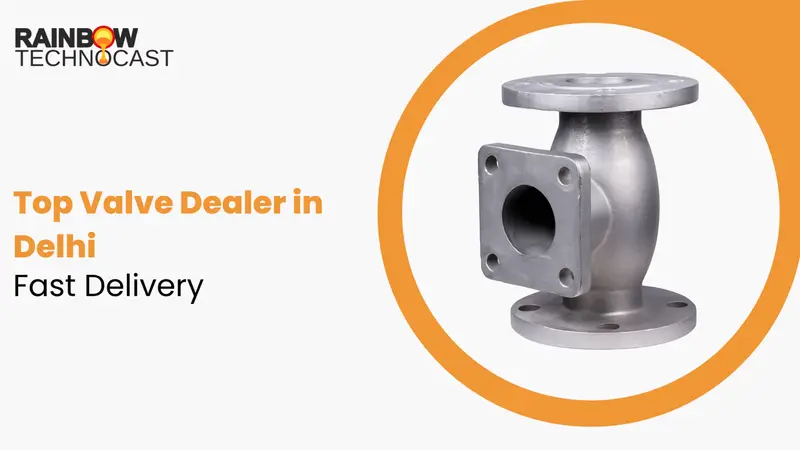
Delhi’s industrial procurement landscape reveals an uncomfortable truth: 57% of valve-related production delays stem from dealers overpromising stock availability, then scrambling to source from distant suppliers when orders arrive. Most dealers operate as intermediaries rather than integrated stockists, creating a coordination gap that extends lead times from days to weeks. This problem intensifies during urgent replacements—when critical valves fail, buyers discover their “local dealer” can’t deliver for 10-14 days because inventory sits elsewhere. The cost compounds beyond downtime: emergency airfreight, premium pricing, and project schedule disruptions that damage client relationships. The solution requires partnering with dealers who maintain verified local inventory, control quality through direct manufacturer relationships, and provide technical support during specification.
This guide examines valve types used across Delhi’s industrial sectors, dealer evaluation criteria that separate genuine stockists from order-takers, and service capabilities that reduce total cost of ownership.
Types of Valves Offered
Ball valves deliver quarter-turn operation with minimal torque requirements for on-off service. Two-piece and three-piece designs accommodate different maintenance approaches—two-piece units require complete removal, while three-piece configurations enable in-line service. Full-bore designs eliminate pressure drop in pipeline applications.
Gate valves provide unrestricted flow when fully open, making them standard in systems where minimal pressure loss matters more than throttling capability. Rising stem designs indicate valve position visually, while non-rising stem types conserve vertical space.
Globe valves enable precise flow modulation through perpendicular seat arrangement. The design creates higher pressure drop than gate or ball valves but delivers superior control for temperature regulation.
Butterfly valves occupy minimal space and offer cost advantages in large diameters. Wafer-style bodies fit between flanges without additional gaskets, while lug-style designs enable dead-end service.
Check valves prevent reverse flow automatically when upstream pressure drops. Swing check, dual-plate, and lift check variants suit different installation orientations and flow velocities.
Industries Served in Delhi
Power generation facilities across Delhi NCR specify high-temperature valves for boiler feedwater and steam distribution. Alloy steel materials resist creep deformation during continuous operation above 540°C.
Chemical plants in Okhla and Narela industrial areas require corrosion-resistant materials that handle acids, caustics, and solvents. Stainless steel and exotic alloy construction prevents premature failure in aggressive media.
Water treatment infrastructure serving Delhi’s municipal systems relies on large-diameter butterfly and gate valves. Epoxy-coated bodies resist corrosion in potable water and wastewater applications.
Food processing and pharmaceutical facilities demand sanitary valves meeting 3-A standards and FDA validation requirements. Electropolished surfaces prevent bacterial colonization and enable clean-in-place protocols.
Oil and gas terminals near Delhi specify fire-safe valves meeting API 607 standards for hydrocarbon service. Emergency shutoff systems require fail-safe actuation during power loss.
Dealer Selection Criteria
Inventory verification separates actual stockists from trading intermediaries. Request warehouse visits to confirm physical inventory rather than accepting claims. Genuine dealers maintain 30-45 days of stock for common configurations.
Manufacturer relationships determine pricing structure and technical support access. Authorized dealers receive factory training and preferential allocation during supply constraints. Direct manufacturer partnerships enable faster resolution when technical issues emerge.
Technical capability matters when specifications require validation. Dealers with engineering staff help match pressure ratings to operating conditions and recommend materials for specific media.
Quality Assurance Standards
Material certification traces alloy composition back to mill heat numbers. Test reports document chemical composition and mechanical properties that determine corrosion resistance and strength. Dealers who provide certified material reports reduce liability in regulated industries.
Pressure testing validates structural integrity before installation. Hydrostatic test certificates confirm shell and seat testing at specified pressures. Digital certificates with traceable serial numbers provide accountability.
Local Dealer Advantages
Geographic proximity enables same-day delivery for emergency requirements. Delhi-based dealers dispatch stock items within 4-6 hours versus multi-day shipping from distant locations. Face-to-face meetings clarify specifications more effectively than remote communication.
Reduced logistics costs improve project economics measurably. Eliminating interstate freight and handling charges saves 12-18% on delivered costs. Installation support becomes practical when dealers operate locally.
Frequently Asked Questions
Q: How do I verify a dealer maintains actual inventory versus drop-shipping?
A: Request warehouse visits to inspect physical stock. Check delivery capabilities for same-day or next-day fulfillment on common items. Genuine stockists provide specific shelf locations and quantities for requested valves.
Q: What certifications should dealers provide with industrial valves?
A: Expect material test reports documenting chemical composition, hydrostatic test certificates with actual pressures recorded, and compliance certificates for applicable standards like API or ASME. Critical applications require full traceability from manufacturer to end user.
Q: Can dealers customize valves for specific requirements?
A: Authorized dealers coordinate custom orders through manufacturer relationships. Modifications include extended stems, special trim materials, and unique actuation interfaces. Custom work typically extends lead times by 3-5 weeks.
Q: What support should I expect after purchase?
A: Capable dealers provide installation guidance, troubleshooting assistance, and spare parts availability. Service agreements cover preventive maintenance including packing adjustment and seal replacement.
Conclusion
Select dealers who maintain verified local inventory, provide manufacturer-backed technical support, and demonstrate quality through proper documentation. This approach eliminates procurement delays while ensuring valves perform as specified.
Rainbow Technocast operates as an integrated manufacturer and authorized dealer maintaining extensive inventory across valve types commonly specified in Delhi industrial sectors. Our technical team provides specification support, material selection guidance, and field installation assistance for projects requiring reliable flow control solutions.
Need valves for your Delhi facility? Contact our NCR sales office with your specifications to receive same-day quotes, inventory confirmation, and delivery schedules that match your project timeline.